Kujwana Delta Ride

Quick facts
About
Amenities
Reviews
Accommodation

Okavango Delta, Botswana

7 nights

fr £5,390

Open all year

Max 8 people

Stationary / Base Camp and other accommodations on request

Riding level: 4-5

Max weight: 90 kg

Maun International Airport

Quick facts
About
Amenities
Reviews
Accommodation

Okavango Delta, Botswana

7 nights

fr £5,390

Open all year

Max 8 people

Stationary / Base Camp and other accommodations on request

Riding level: 4-5

Max weight: 90 kg

Maun International Airport

Quick facts

About

Amenities

Reviews

Accommodation

Okavango Delta, Botswana

7 nights

fr £5,390

Open all year

Max 8 people

Stationary / Base Camp and other accommodations on request

Riding level: 4-5

Max weight: 90 kg

Maun International Airport

Itinerary
Get a closer look at what awaits you on your horseback safari. Explore the itinerary day by day and discover more about the riding, wildlife encounters, accommodation and adventures along the way.
Day 1
You’ll be met at Maun Airport before a 20-minute transfer by helicopter straight into Kujwana Camp, or by light aircraft to the nearest airstrip, followed by roughly an hour’s drive to camp by vehicle or boat (water permitting). Upon arrival, you’ll have time to settle into your spacious tents before lunch or afternoon tea and an introductory talk. This is followed by an orientation ride of approximately 1.5–2 hours. Dinner will be shared with your guides and fellow guests in our lovely raised dining area.
Day 2
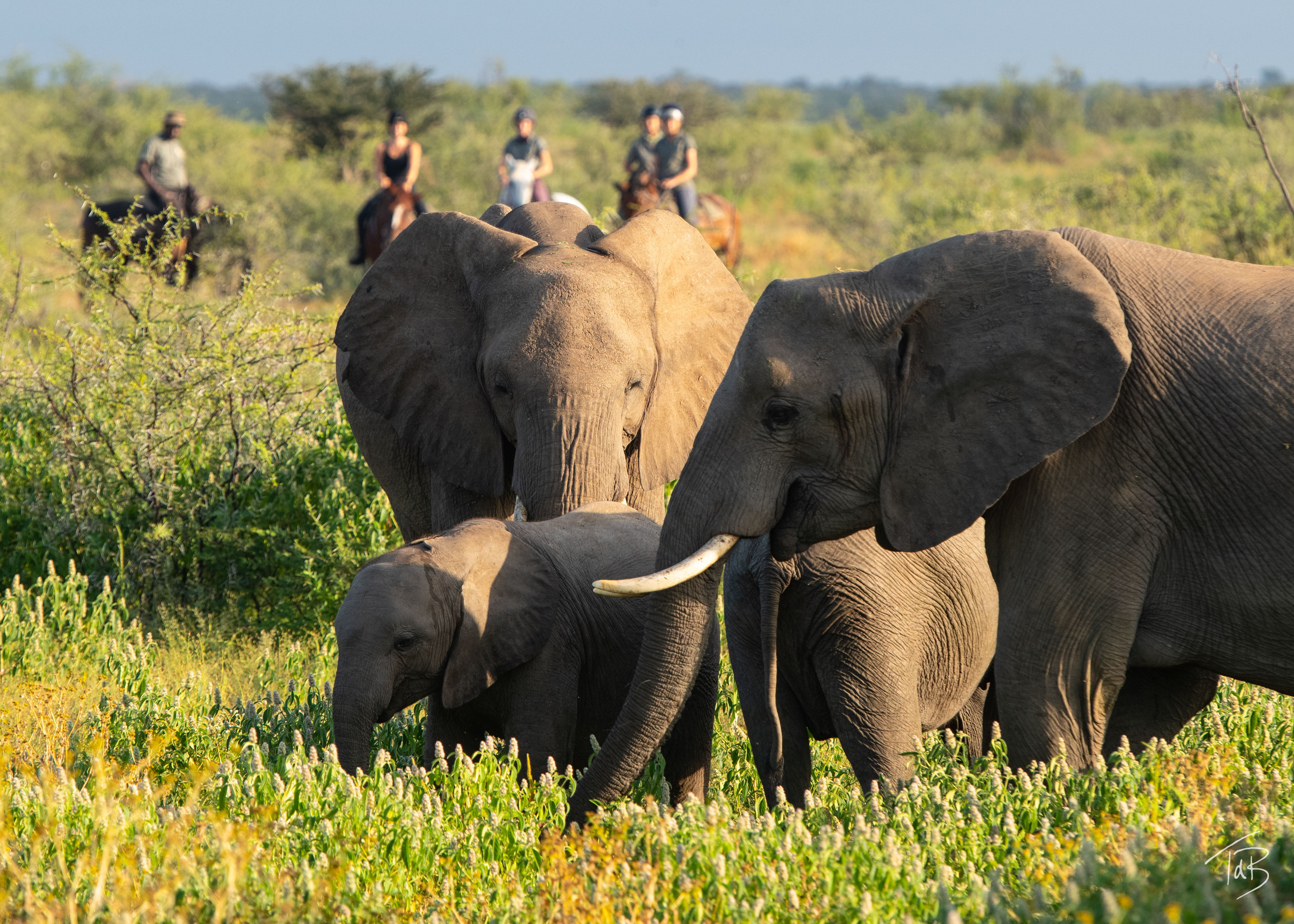
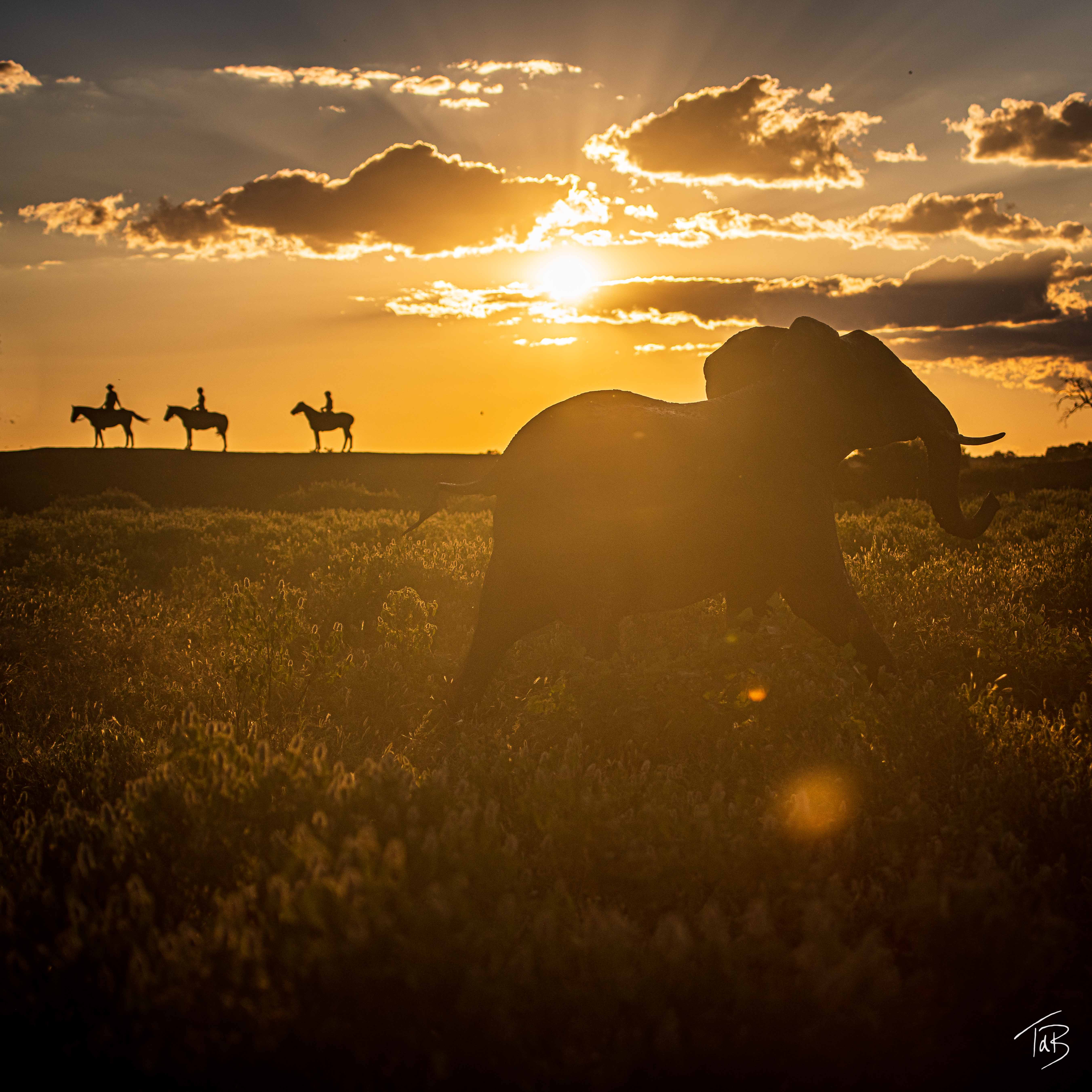
You’ll be woken early with a tray of tea or coffee to enjoy in bed while listening to the sounds of the bush. After breakfast, set out on a morning ride in the Xudum area, wading through lush green molapos that lead from island to island. You might surprise a timid reedbuck out of its dense cover on a wooded island, or encounter herds of elephants, buffalos, and zebras moving through the open plains. Return to camp for lunch followed by a siesta or a refreshing swim in the pool. In the late afternoon, head out on a peaceful mokoro expedition and enjoy the tranquility of the Delta from our dugout canoes as the sun sinks behind the horizon.
Day 3
Today is a full-day ride of about 30 km from Kujwana Camp to our fly camp. The route crosses open floodplains and scattered islands towards the Qwaapu river system, where you’ll encounter a wide variety of wildlife. A picnic lunch is served on a shady island, followed by a siesta with camp beds and maybe a swim, before continuing with another two hours of riding in the afternoon. Arrive at our fly camp at sunset and enjoy a refreshing drink while admiring the stunning views. Here you’ll find luxurious tents with comfortable beds, hot showers in your ensuite bathroom, and a large mess tent with sofas and a small library. Fall asleep to the sound of your horse munching hay nearby.
Day 4
To give the horses a rest, we’ll spend the morning on a game drive incorporating a bush walk and tracking. This is the perfect time to look for predators such as the endangered African wild dog and the leopards often found in this area. After lunch and a siesta, enjoy some downtime in camp before an afternoon ride exploring the eastern side of the concession. This ride passes through varied landscapes, fording numerous hippo channels in this truly remote area.
Day 5
A full day’s ride back to Kujwana Camp, stopping for a picnic at a different spot and completing the journey begun two days earlier. The route leads through a chain of rain pans, offering a striking contrast to the floodplains. Mopane forests and acacia woodlands provide excellent food for elephants, kudu, and giraffes. Breeding herds of elephants enjoy the security of the forest, while zebra, wildebeest, and buffalo may also be found if the pans hold water. If conditions allow, you’ll even have the chance to swim your horse back into camp.
Day 6
In the morning, enjoy another ride and perhaps try a different horse — one of our homebreds, a strong Boerperd, or one of our spirited Arabs. After a long lunch and some rest, we’ll head out for a bush dinner and a night drive back to camp. This is a special chance to spot nocturnal animals and enjoy stargazing in the African night sky.
Day 7
The morning ride will be spent searching for any game you may have missed during the week. At lunchtime, your guide will host (and cook!) a barbecue by the pool. After a siesta, enjoy an activity of your choice or simply relax with a book in a shady spot. The evening ends with a farewell dinner, sharing stories from your safari adventure.
Day 8
If your flight time allows, you’ll enjoy an early morning game ride before brunch and your departure. Farewell — for now!
Do you prefer to observe the animals in a different way than from horseback?

Even non-riding guests have a fantastic experience at OHS – mokoro excursions, speedboat trips, game drives and guided walks – there is an opportunity to experience it all. Non-riders meet up with riders for picnic lunches, afternoon activities, bush dinners, fly camps and sleep-outs under the stars, so if you are travelling as a mixed group, you will still spend plenty of time together.

More information
Okavango Horse Safaris has a herd of over 60 horses, chosen primarily for their temperament and suitability for safaris. The herd consists of Thoroughbreds and Thoroughbred crosses, Arabs and Anglo-Arabs, as well as Boerperds. Many of the horses come from Zimbabwe or carefully selected breeders in South Africa, and in recent years they have also begun breeding their own horses using the American Saddlebred stallion, Lamu. The horses are well-schooled for safari, responsive and sensible, and great care is taken to match each rider with the right horse. Horse welfare is maintained to a very high standard, with regular farriery and dental care, vaccinations and worming, as well as individually fitted tack. When the horses are not working, they have access to extensive, varied grazing where they roam freely in the delta surroundings. You can choose between English saddles with seat savers for extra comfort, and South African trail saddles. The tack is meticulously maintained, and most horses are ridden in a snaffle bit. The Okavango Delta is a diverse landscape of palm islands, grassy floodplains, woodland, and crystal-clear waterways. During the high-water season, usually between May and September, vast areas of the plains fill with water and the horses wade between the islands. Along the edges of the islands, the ground is often firm and ideal for both trotting and cantering. The safari requires at least riding level 4 (experienced). You need to be a confident and competent rider with good fitness to enjoy the long days in the saddle. For non-riding companions, there is a separate programme available. You will typically ride for 4–6 hours a day, with breaks for picnic breakfasts or lunches. Approximately every two hours, you will also dismount for a short walk on foot, offering variety and relief for both horse and rider. Children can join provided they are strong and competent riders. The recommended minimum age is 12, and a certificate from a riding school or qualified instructor may be required to verify their riding ability. The same price applies to children as to adults.

About Okavango Delta

Okavango Delta is one of Africa's most iconic and spectacular wilderness areas – a vast inland delta in northern Botswana where the Okavango River fans out, creating a unique network of lagoons, water channels, islands and seasonally flooded plains. The area is designated a UNESCO World Heritage Site and is regarded as one of the world's most intact ecosystems. What makes the Okavango so special is the contrast between water and dry savannah. Here the landscape is constantly changing depending on the season and water levels. One day you ride through open grasslands and palm islands, the next through shallow water crossings, floodplains and dense papyrus areas where nature feels almost uncannily alive. Despite Botswana being a dry country, the delta acts as a green oasis in the middle of the otherwise arid Kalahari region. The wildlife in the Okavango is exceptionally rich and varied. There are large elephant herds, buffalo, giraffe, zebra, wildebeest and several different antelope species such as lechwe, impala, kudu and waterbuck. The area is also known for its predators, with the chance of seeing lion, leopard, cheetah, hyena and the rare and endangered African wild dog. Hippopotamuses and crocodiles occur naturally in the waters, and the birdlife is one of the most species-rich in Africa, with hundreds of documented species.

Gallery

2026
2027

Rates

2026

Season

Length

Rate

Low season 28/11 – 27/3

7 nights

£5,390

Mid 28/3 – 29/5 and 3/10 – 27/11

7 nights

£6,475

High season 30/5 – 2/10

7 nights

£7,945

Including

7 nights per person in shared standard accommodation All food and drink, game drives, bush walks, and mokoro tours.

Excluding

Flight tickets, flight transfers, any visa costs, travel insurance, tips.

Transfers

To reach Kujwana Camp, located in the Okavango Delta, a flight is required for the final stretch. Your air transfer is not included in the price. You may choose how you would like to travel this last part, as outlined below (subject to change).

Helicopter

Flying into Kujwana Camp by helicopter is an experience in itself. The 25-minute scenic flight takes you directly from Maun to Kujwana Camp, landing with plenty of time for the afternoon’s activities. The flight offers a fantastic opportunity to see the Delta from above and is the perfect way to begin your safari adventure.

£340

One-way per person Maun – Kujwana / Kujwana – Maun (based on a minimum of 2 people booking)

Fixed wing

These aircrafts regularly transport travelers from Maun International Airport to one of the many airstrips in the Okavango Delta. Flying at low altitude, they offer you the chance to watch the Delta’s majestic landscapes unfold beneath the wings. Please note that Kujwana Camp is located about an hour’s drive from the airstrip, and activities on the day of arrival and departure may not be possible depending on the schedule.

£280

One-way per person Kasane – Xaranna Airstrip / Xaranna Airstrip – Kasane

£450

One-way per person Kasane – Xaranna Airstrip / Xaranna Airstrip – Kasane

2026
2027

Rates

2026

Season

Length

Rate

Low season 28/11 – 27/3

7 nights

£5,390

Mid 28/3 – 29/5 and 3/10 – 27/11

7 nights

£6,475

High season 30/5 – 2/10

7 nights

£7,945

Including

7 nights per person in shared standard accommodation All food and drink, game drives, bush walks, and mokoro tours.

Excluding

Flight tickets, flight transfers, any visa costs, travel insurance, tips.

Transfers

To reach Kujwana Camp, located in the Okavango Delta, a flight is required for the final stretch. Your air transfer is not included in the price. You may choose how you would like to travel this last part, as outlined below (subject to change).

Helicopter

Flying into Kujwana Camp by helicopter is an experience in itself. The 25-minute scenic flight takes you directly from Maun to Kujwana Camp, landing with plenty of time for the afternoon’s activities. The flight offers a fantastic opportunity to see the Delta from above and is the perfect way to begin your safari adventure.

£340

One-way per person Maun – Kujwana / Kujwana – Maun (based on a minimum of 2 people booking)

Fixed wing

These aircrafts regularly transport travelers from Maun International Airport to one of the many airstrips in the Okavango Delta. Flying at low altitude, they offer you the chance to watch the Delta’s majestic landscapes unfold beneath the wings. Please note that Kujwana Camp is located about an hour’s drive from the airstrip, and activities on the day of arrival and departure may not be possible depending on the schedule.

£280

One-way per person Kasane – Xaranna Airstrip / Xaranna Airstrip – Kasane

£450

One-way per person Kasane – Xaranna Airstrip / Xaranna Airstrip – Kasane

Sign up for the newsletter

Follow along behind the scenes and get a first look at unique offers.

Sign up for the newsletter

Follow along behind the scenes and get a first look at unique offers.

Sign up for the newsletter

Follow along behind the scenes and get a first look at unique offers.