Quick facts
About
Amenities
Reviews
Middelburg Mpumalanga, South Africa
fr. 1 - 12 weeks
fr. ZAR 18 900
Open all year
Max 6 people / group
Tented campsite
Riding level: 4-5
Maximum weight: 75 kg
O.R Tambo International Airport
Quick facts
About
Amenities
Reviews
Middelburg Mpumalanga, South Africa
fr. 1 - 12 weeks
fr. ZAR 18 900
Open all year
Max 6 people / group
Tented campsite
Riding level: 4-5
Maximum weight: 75 kg
O.R Tambo International Airport
Quick facts
About
Amenities
Reviews
Middelburg Mpumalanga, South Africa
fr. 1 - 12 weeks
fr. ZAR 18 900
Open all year
Max 6 people / group
Tented campsite
Riding level: 4-5
Maximum weight: 75 kg
O.R Tambo International Airport
Accommodation
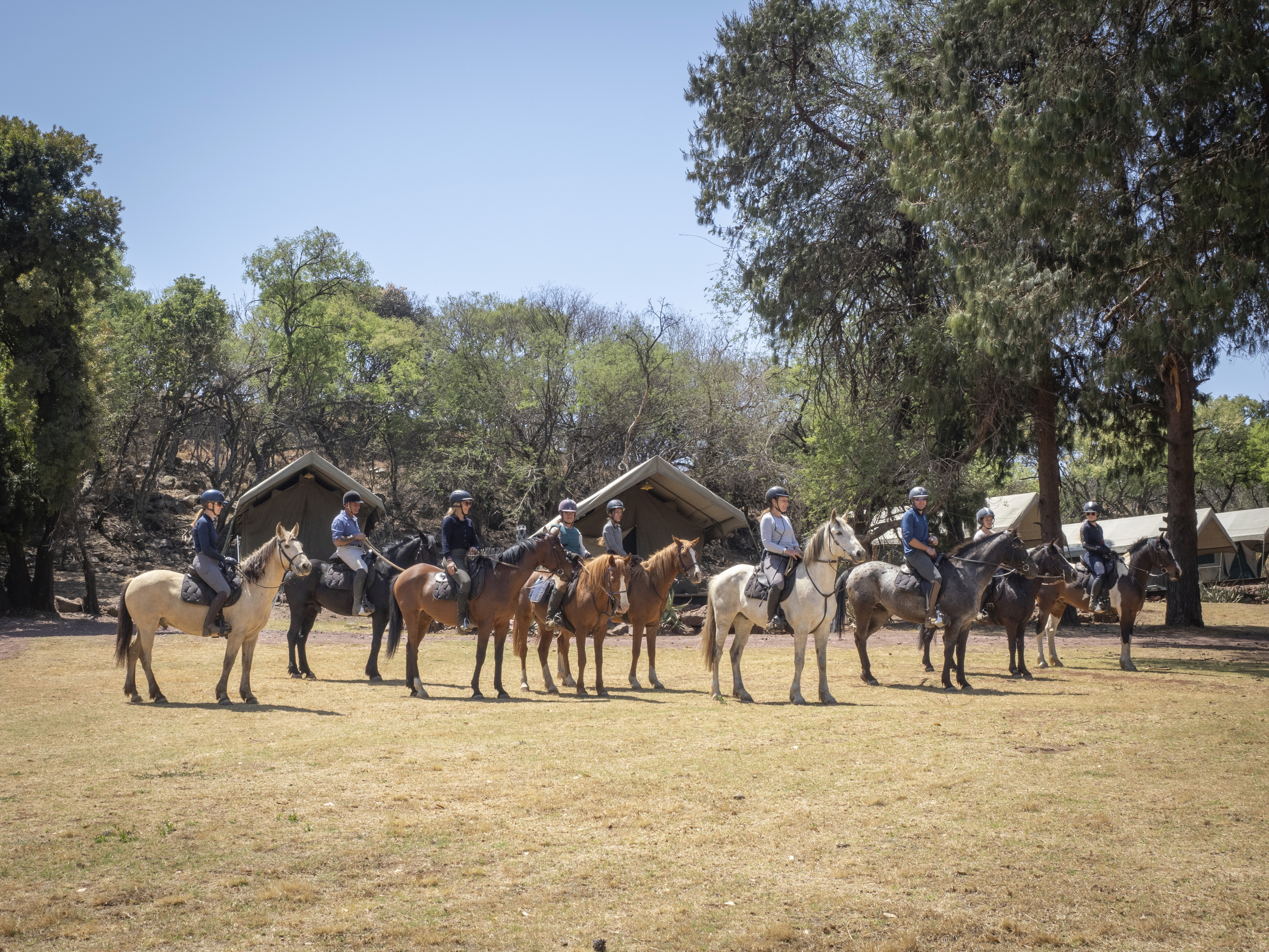
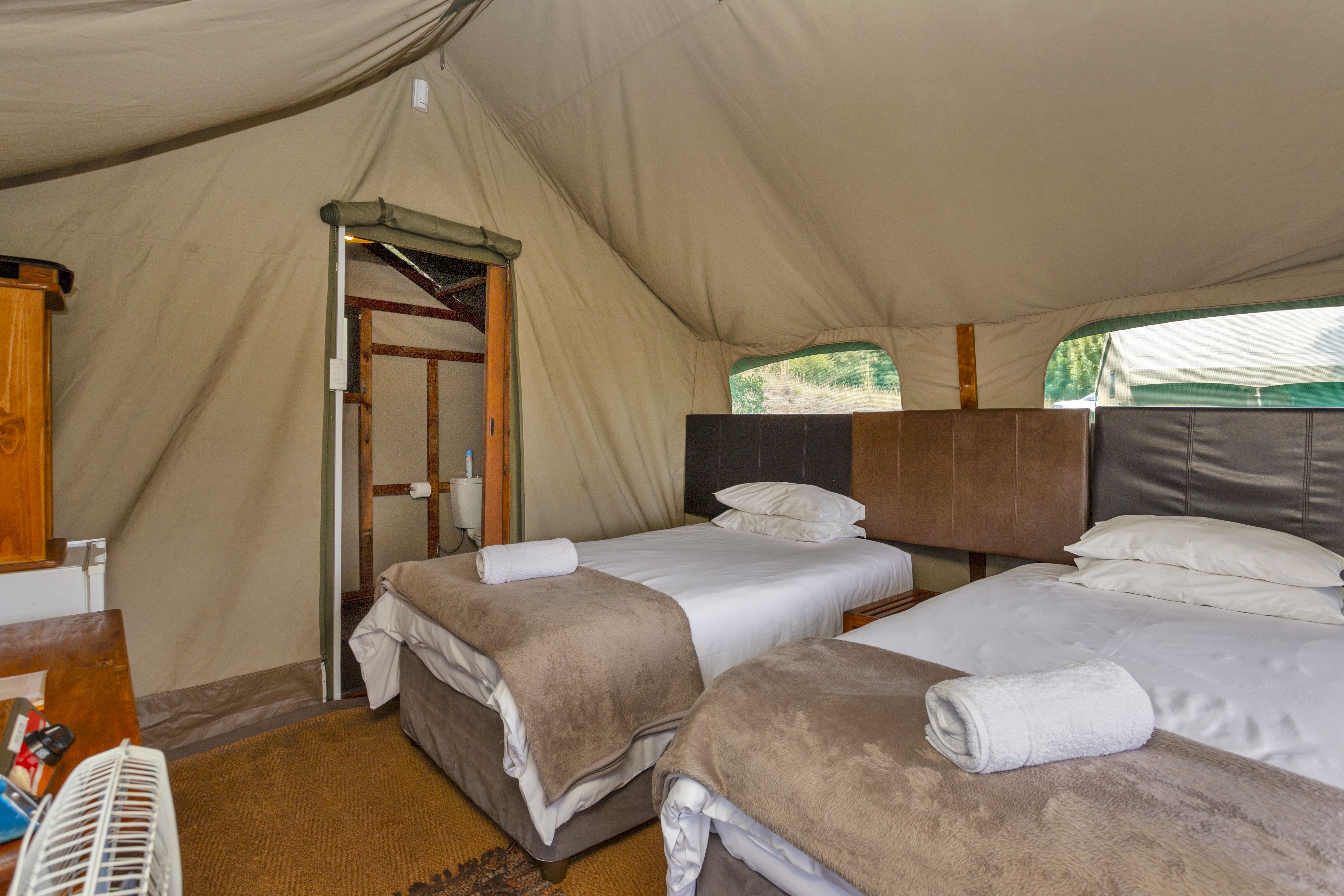
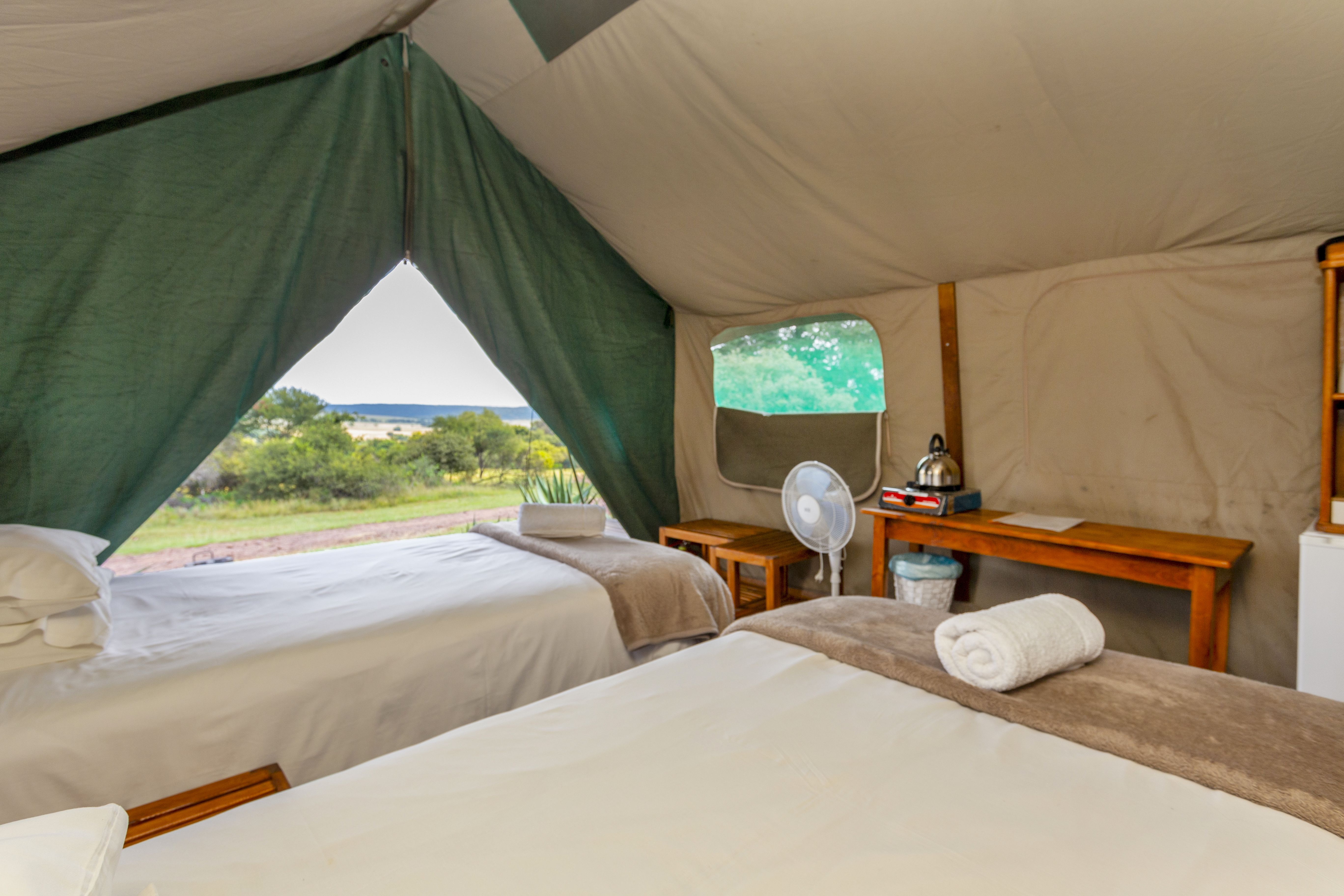
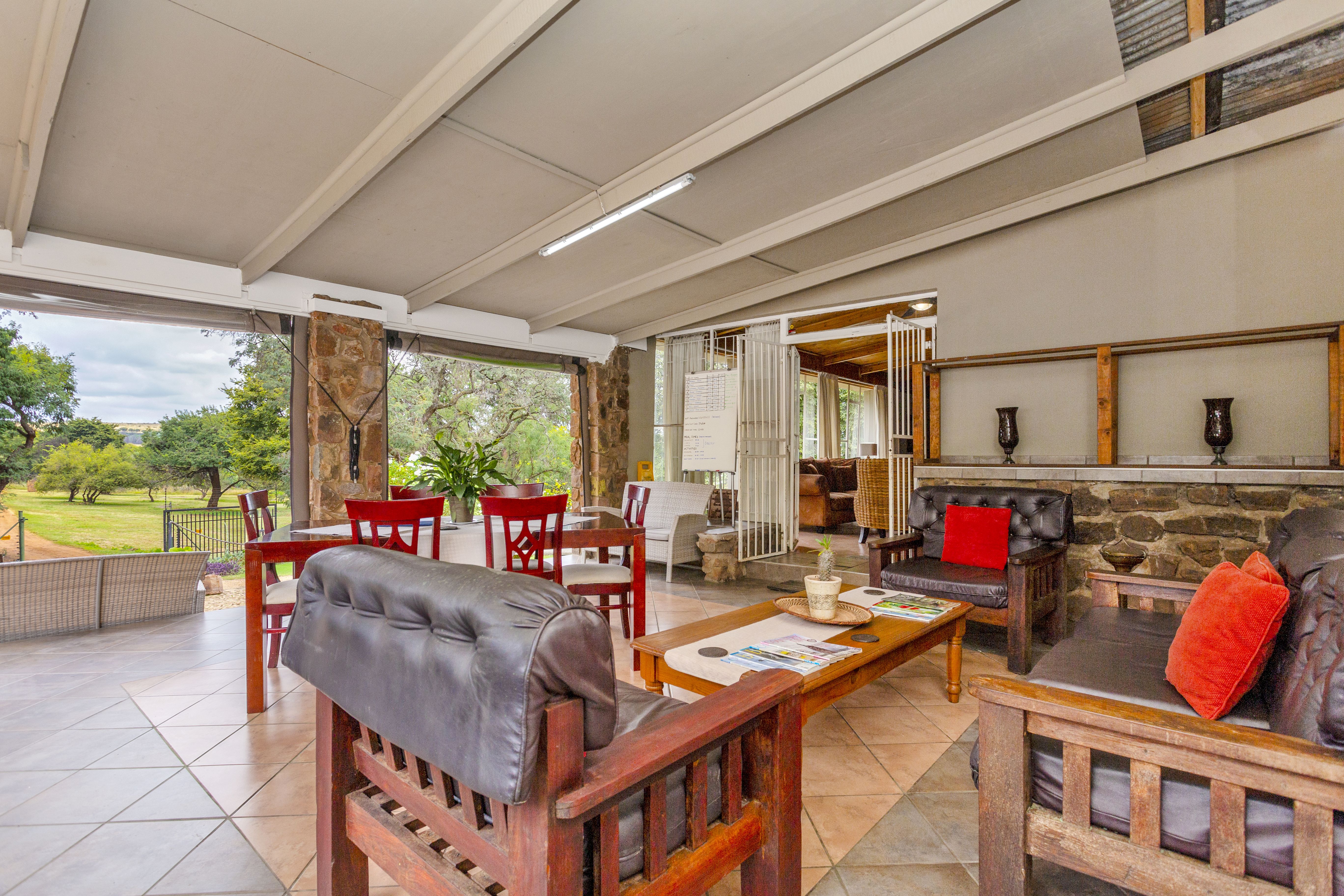
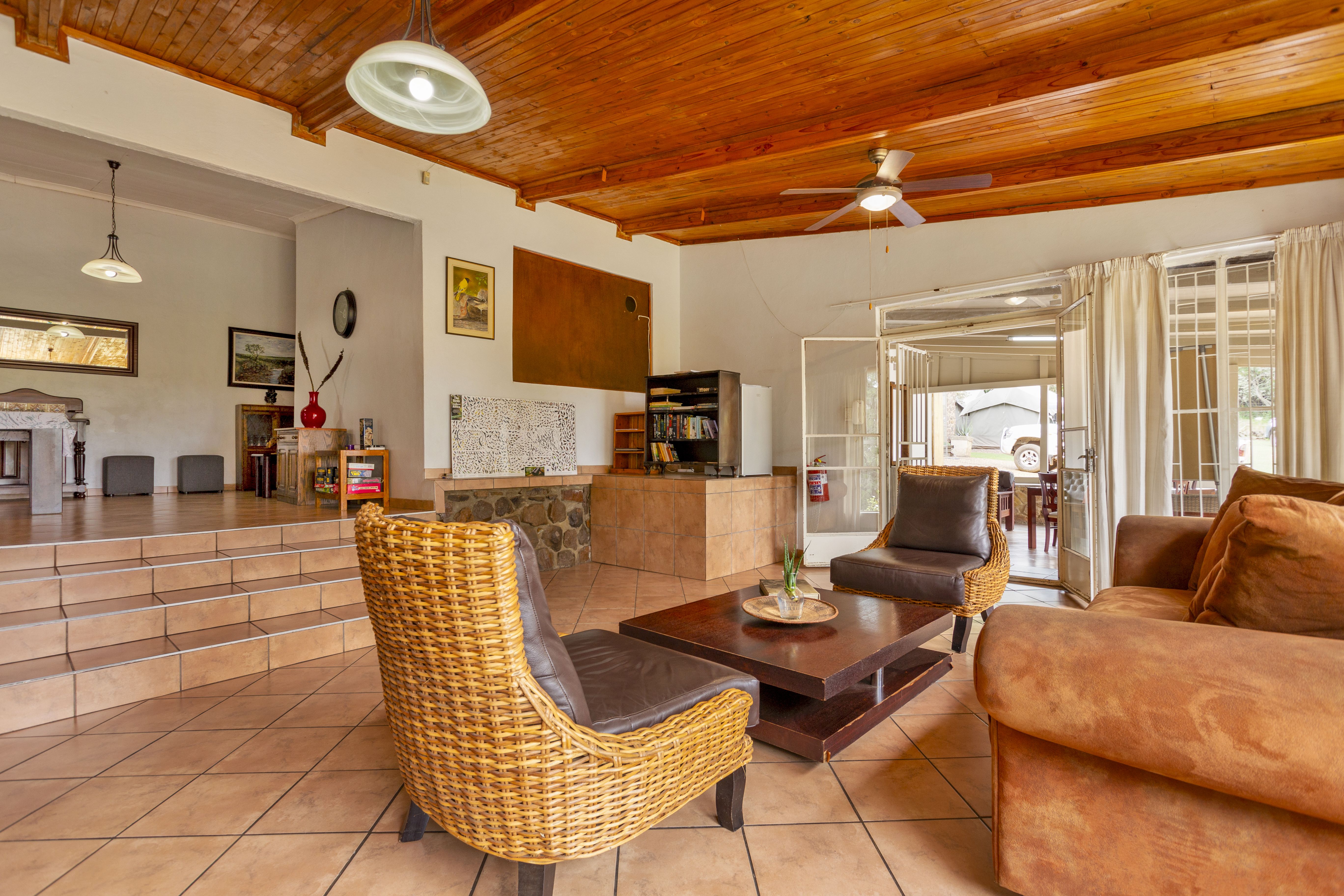
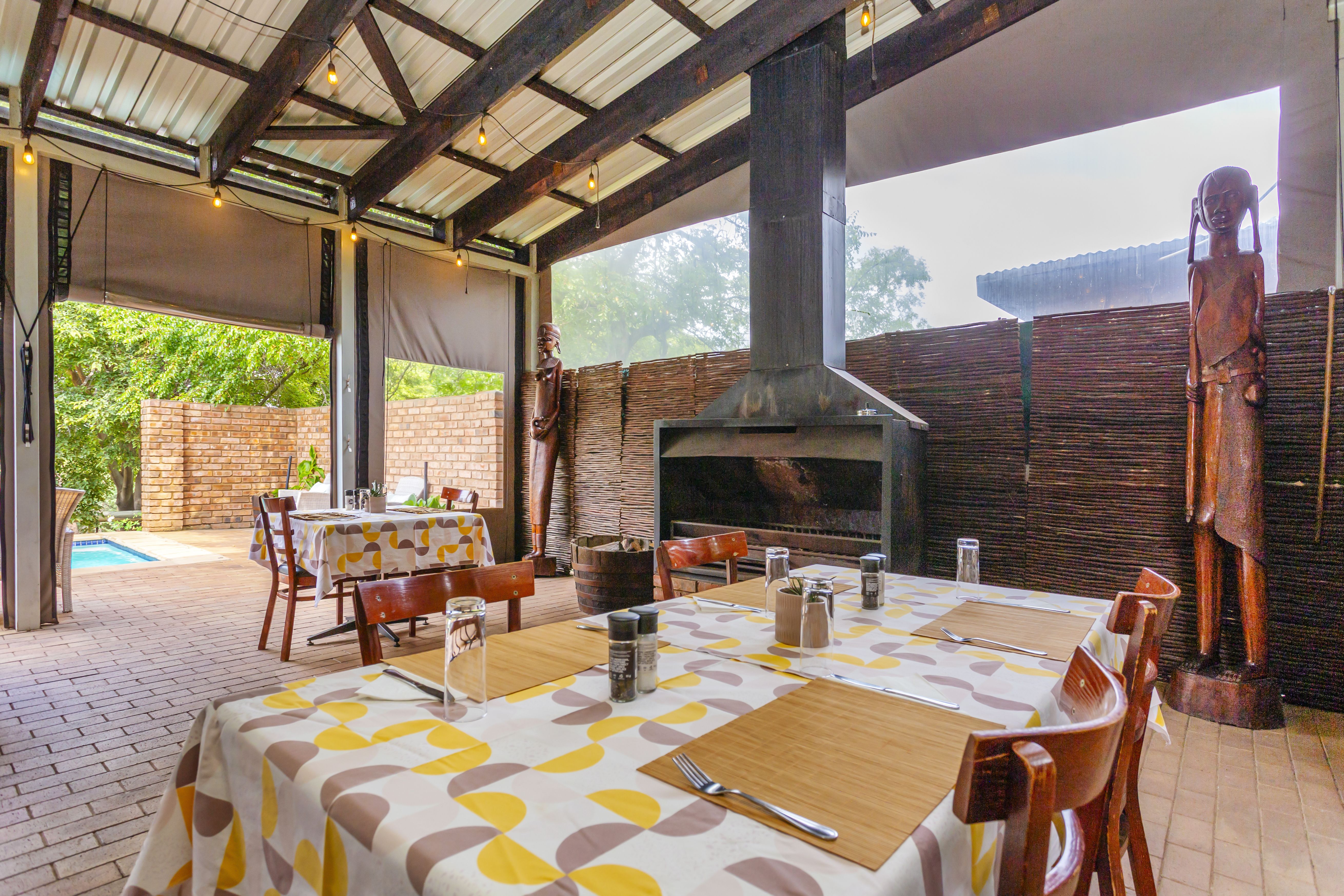
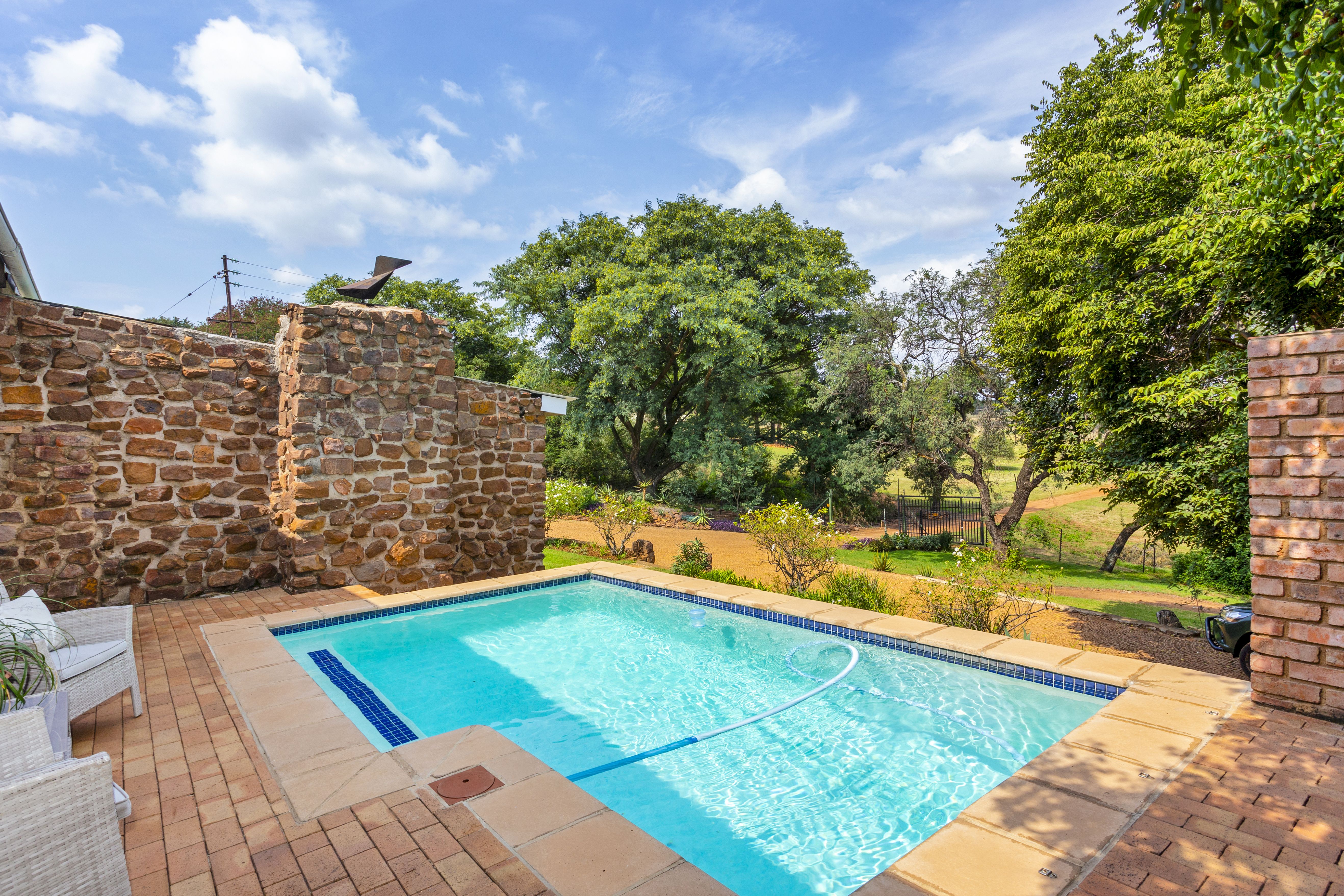
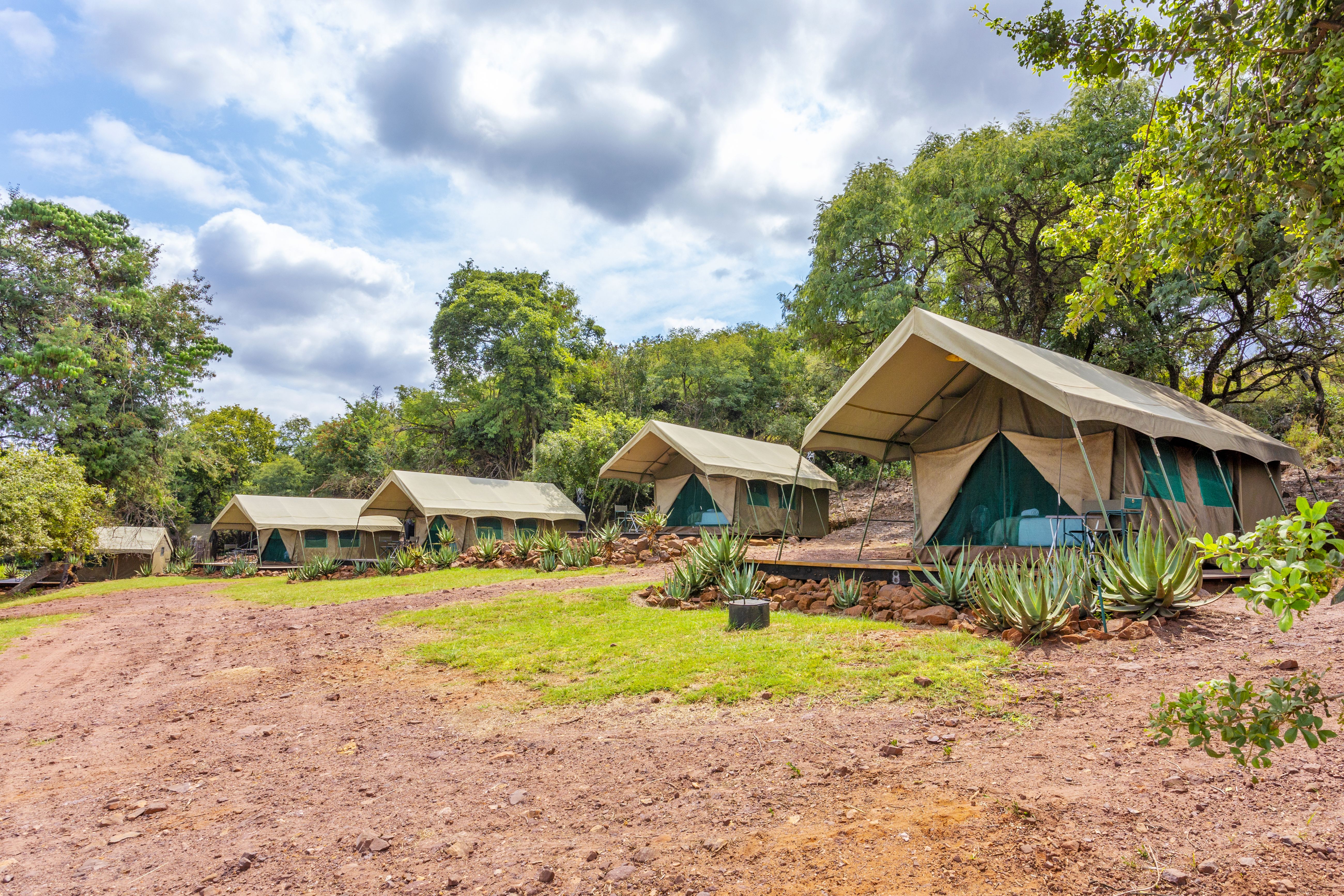
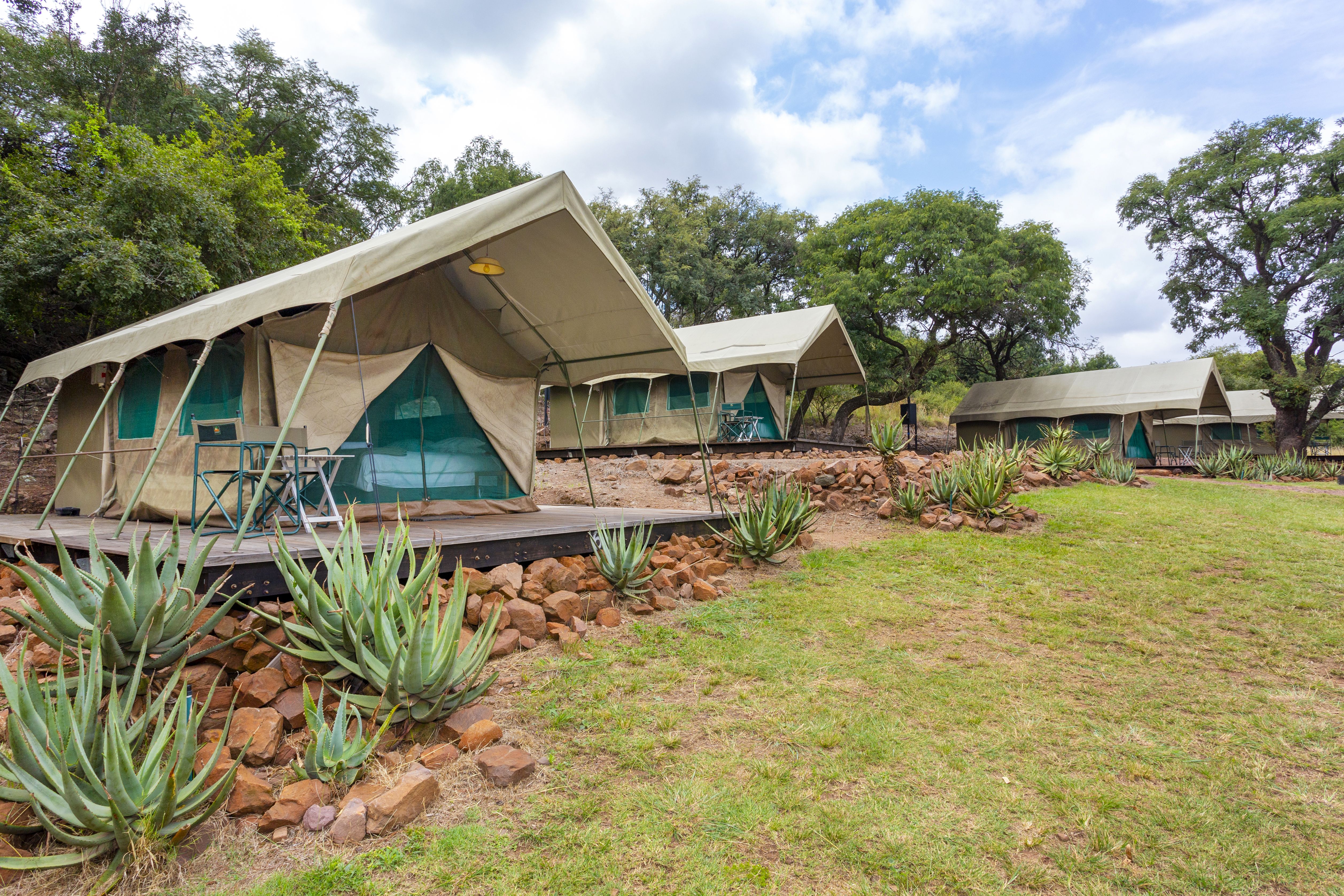
The accommodation at Wild Ride is a small, personal tented camp with nine safari tents, located in the middle of the reserve but with amenities that make everyday life easy after long days on horseback. The tents are about 100 meters from the communal areas and offer both privacy and proximity to the camp's social life. The camp's communal areas are simple yet thoughtful: a cold water pool, a lounge with a fireplace, a TV room with board games, and access to hiking trails in the reserve. Wi-Fi is available in the main area but not in the tents – a conscious choice to maintain a sense of calm and presence.
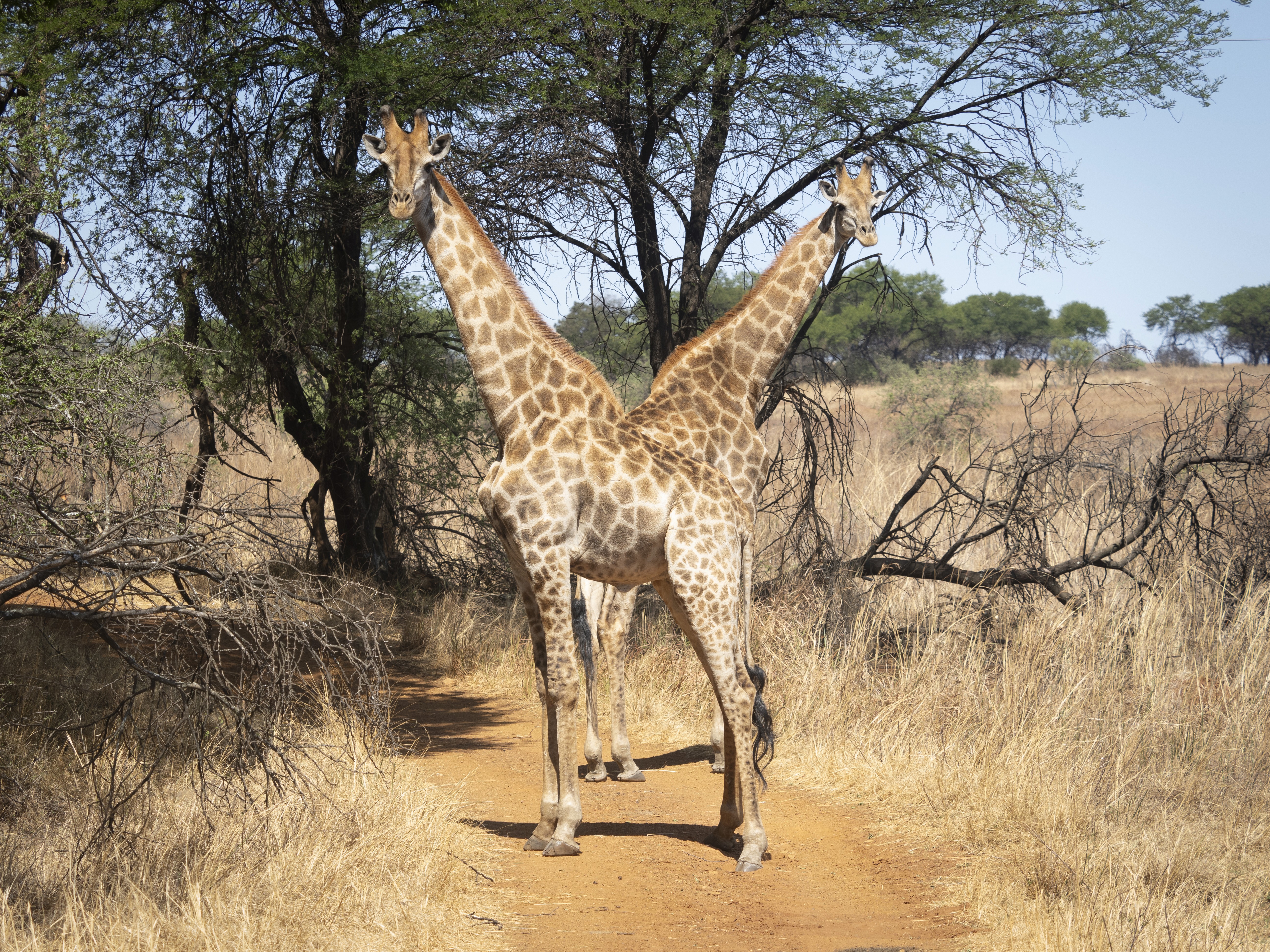
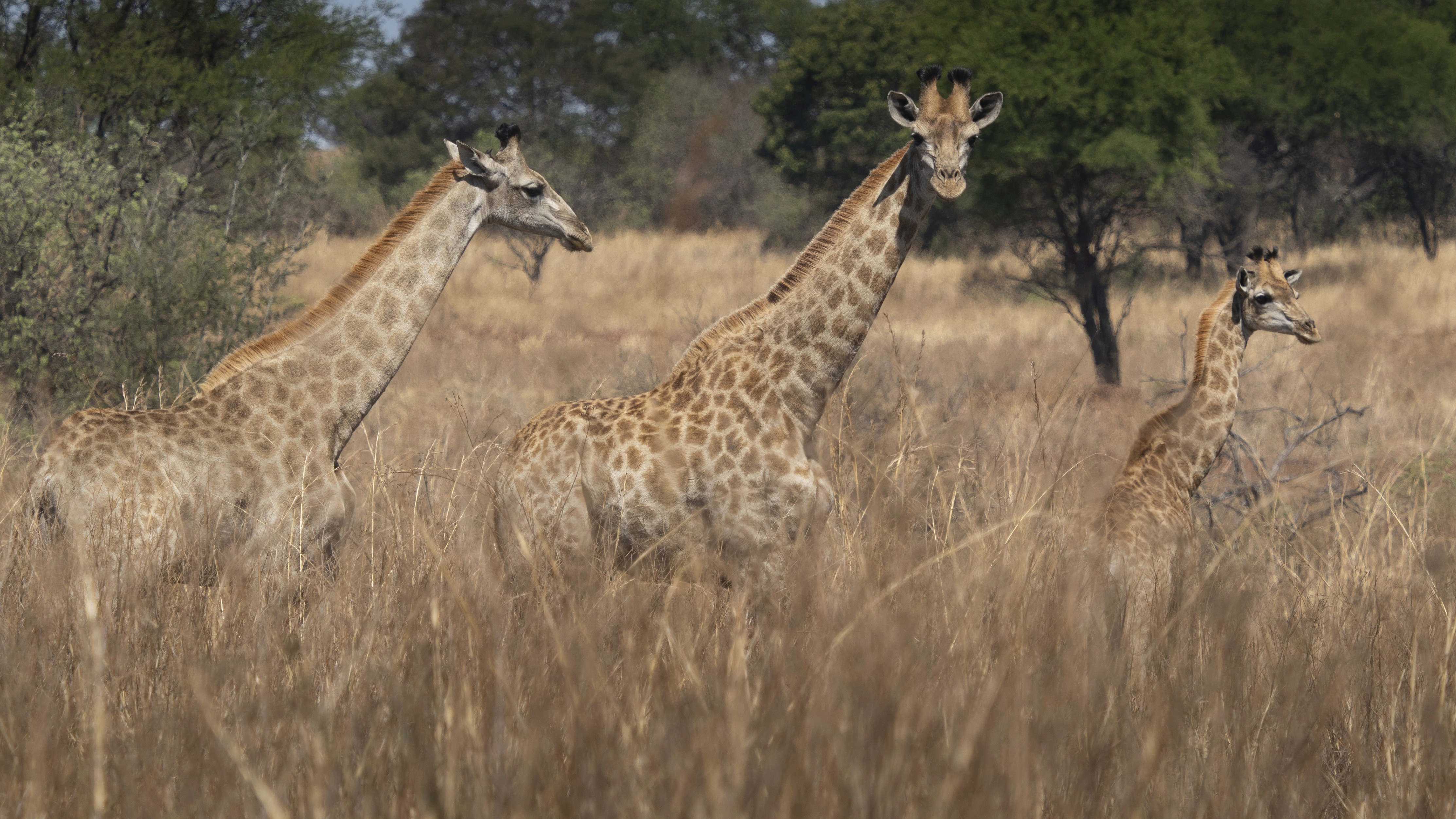
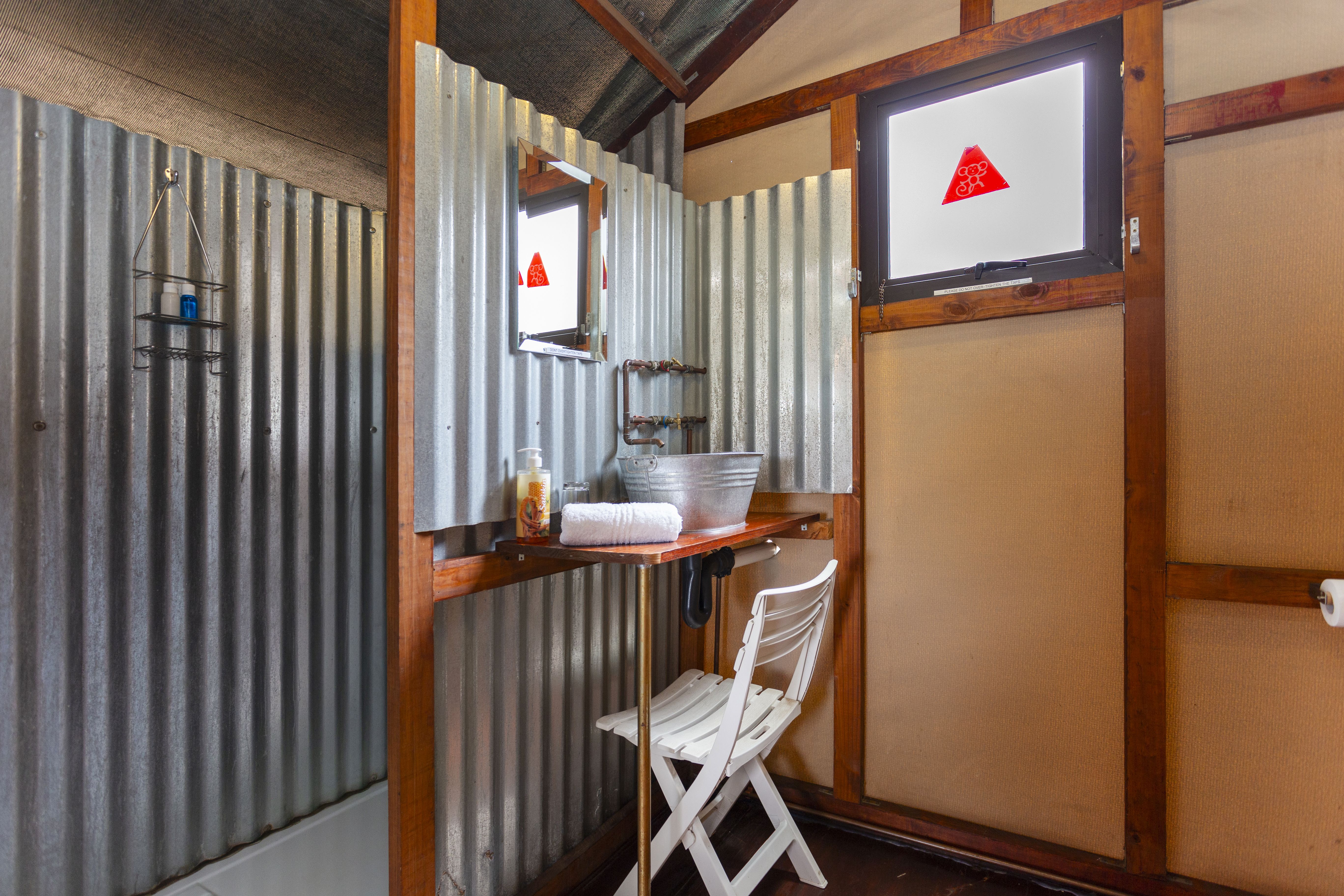
Each tent has its own bathroom, electricity, a fan for warm days, and electric blankets for cooler nights. The beds are comfortable – either two ¾ beds or a spacious king size – and the tent is equipped with linen sets, towels, and storage. Outside, there is a private veranda with chairs and a table, where it is not uncommon to see giraffes passing by in the early mornings or late afternoons. This is not a luxury accommodation in classic safari style, but a functional, homely, and genuine bush camp. The focus is on riding, the horses, and life close to nature – with sufficient comfort for you to rest, recover, and feel at home during longer stays.

A day at Wild Ride
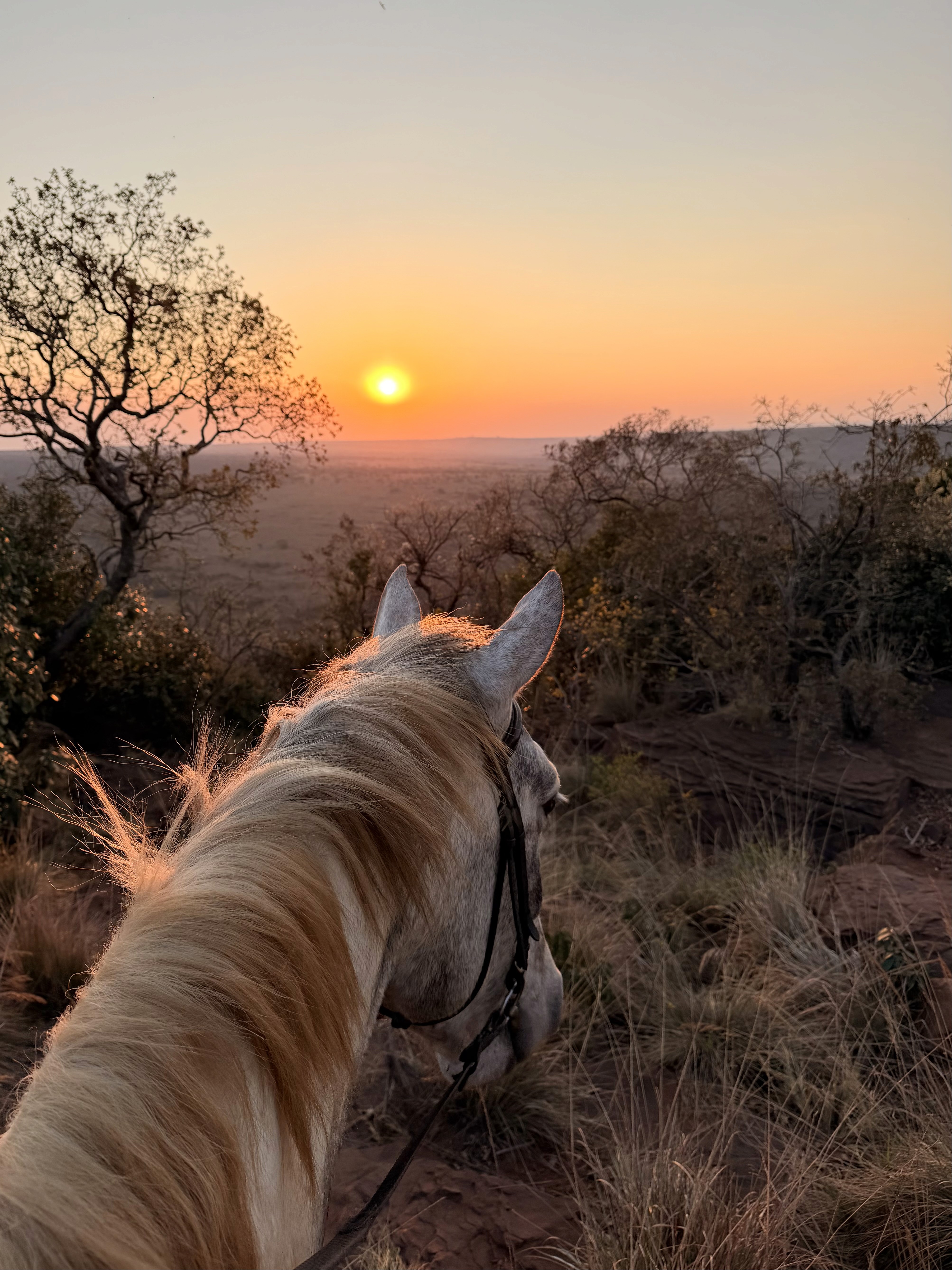
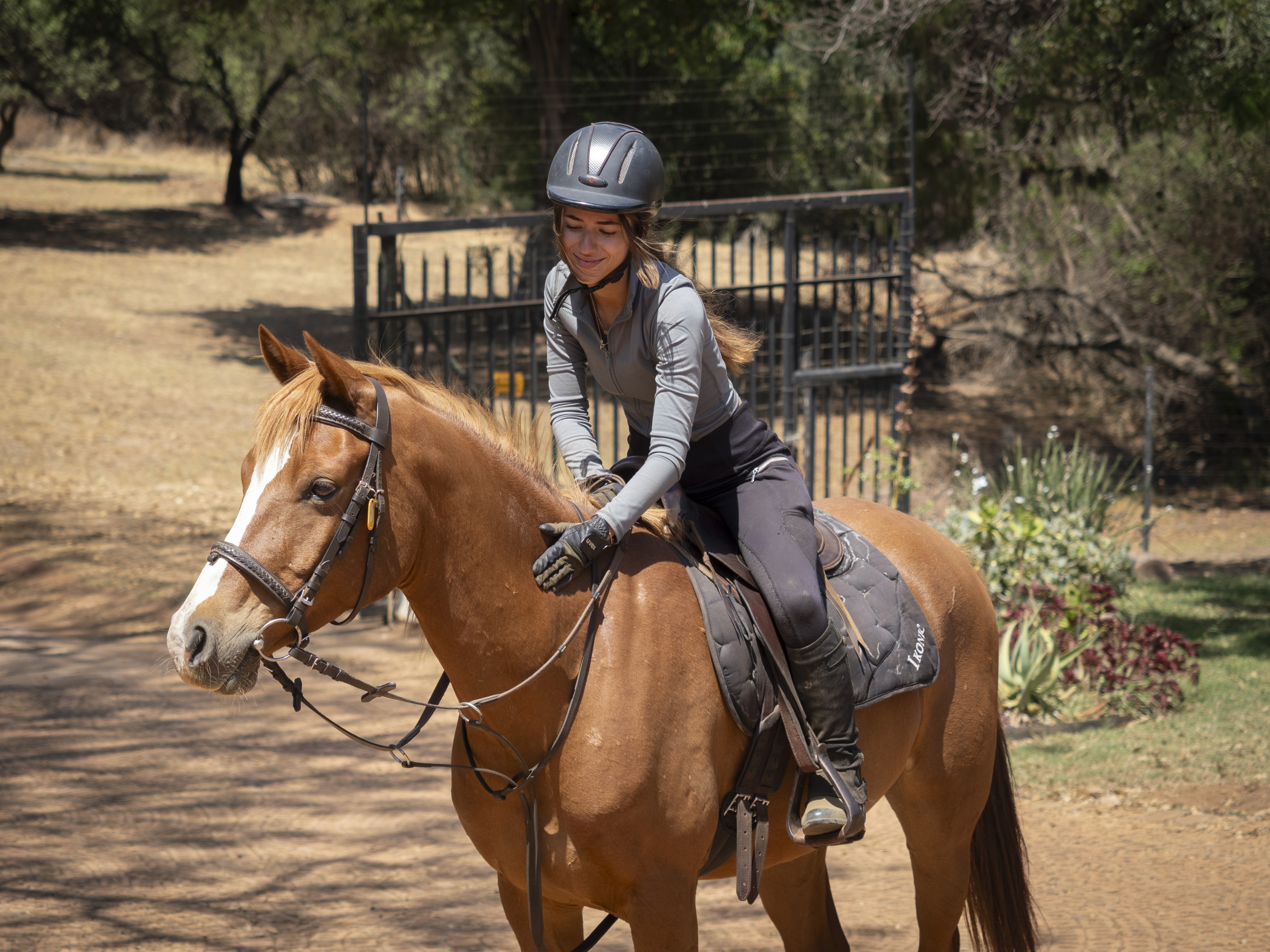
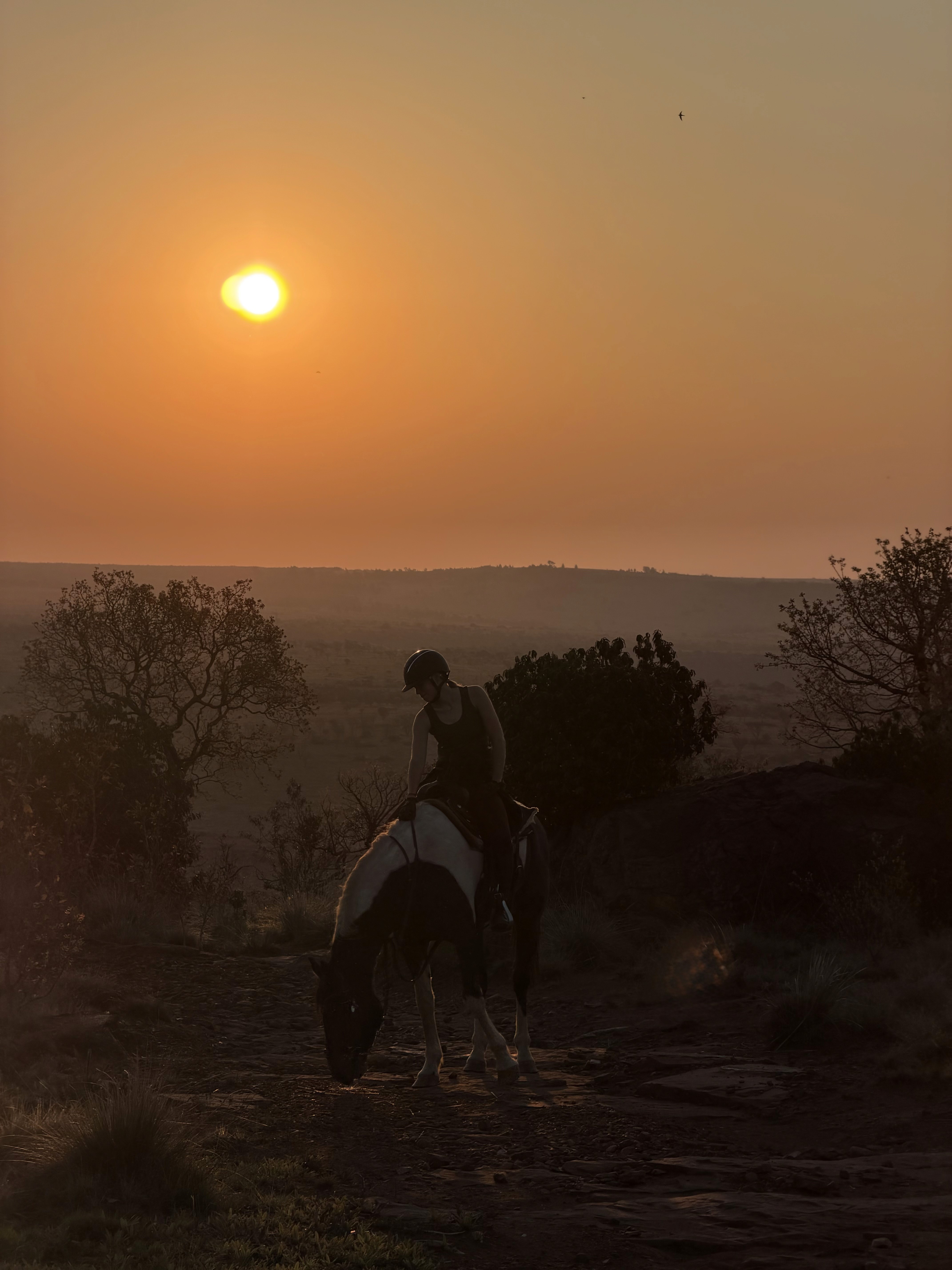
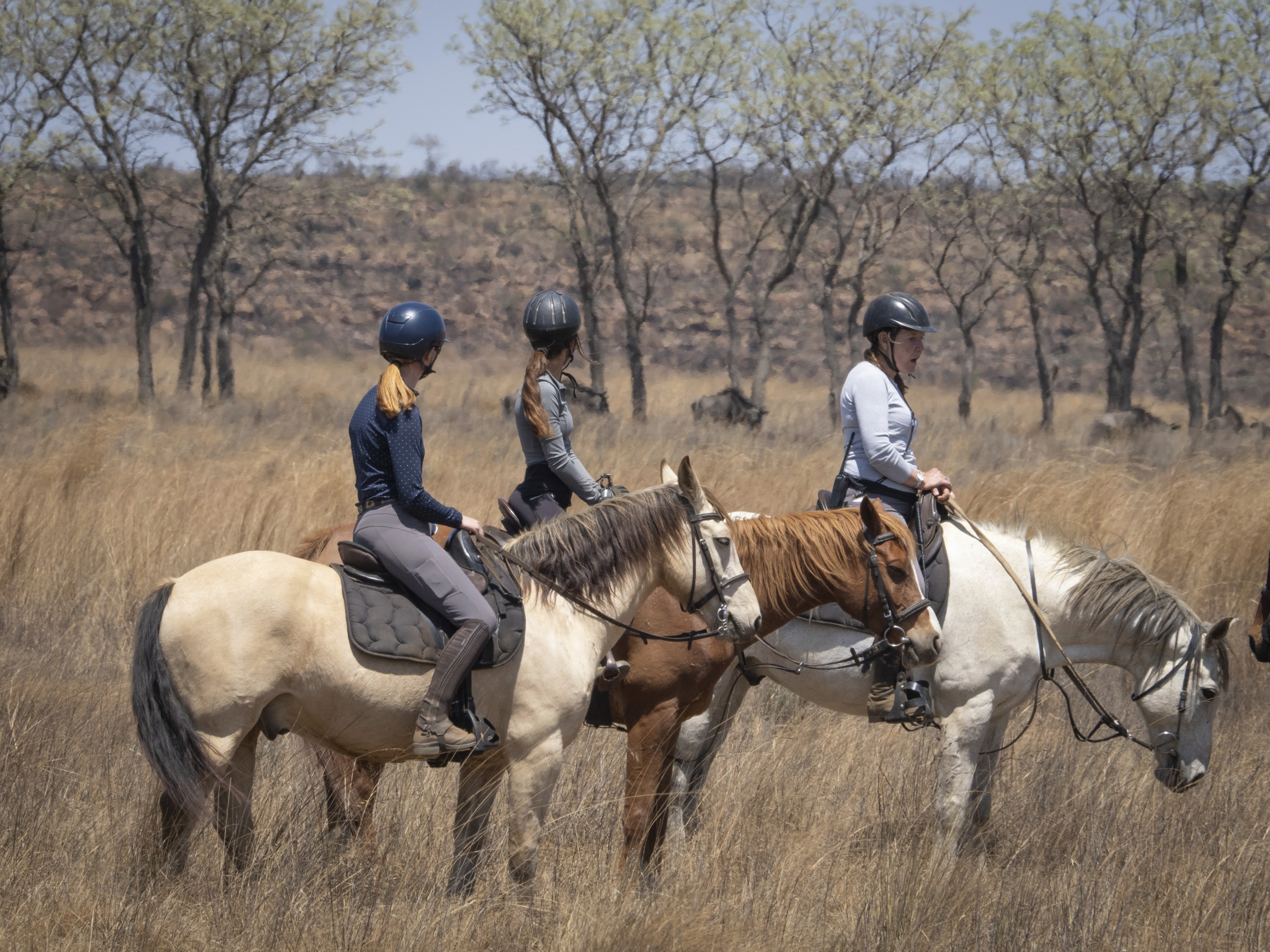
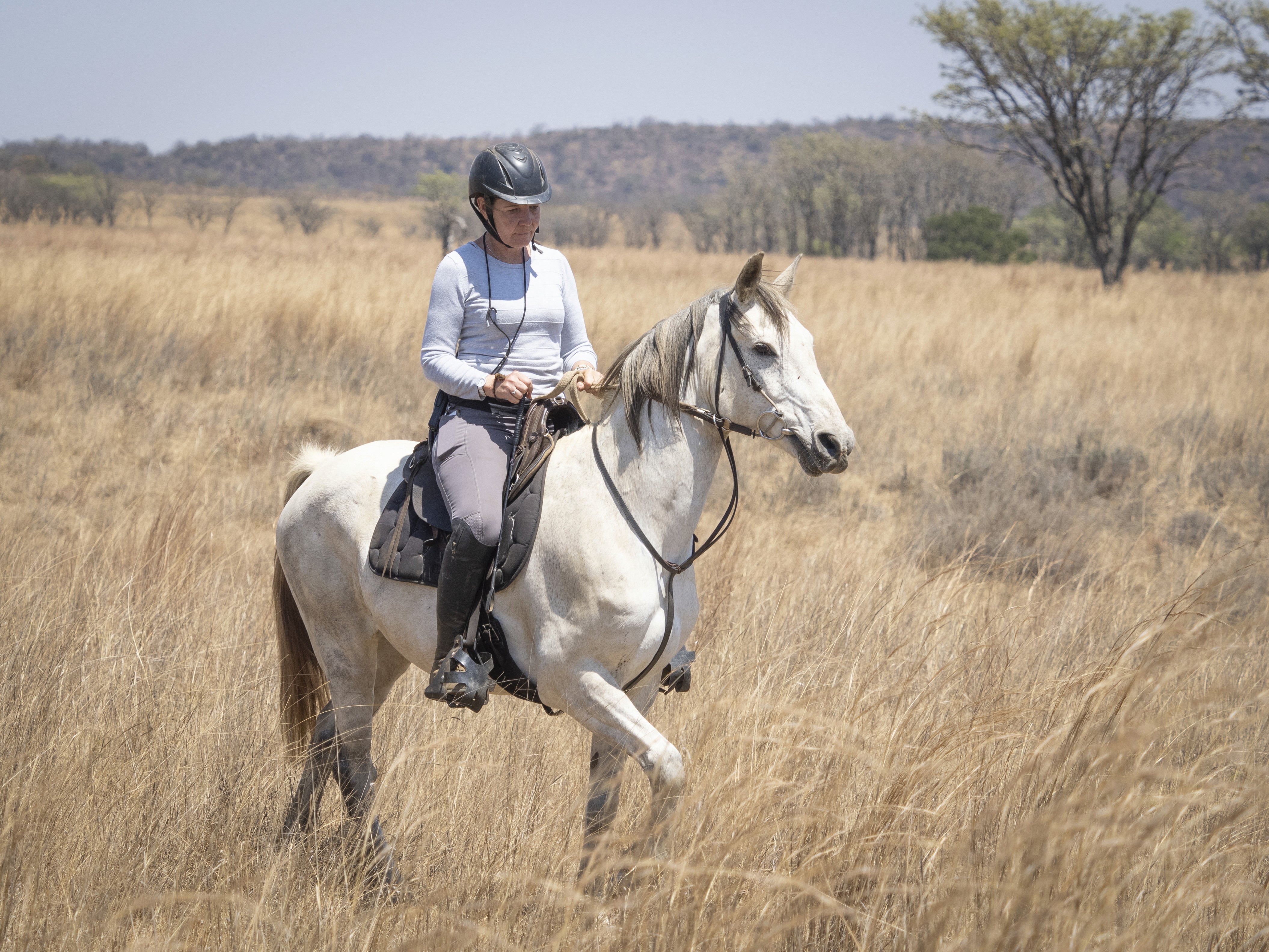
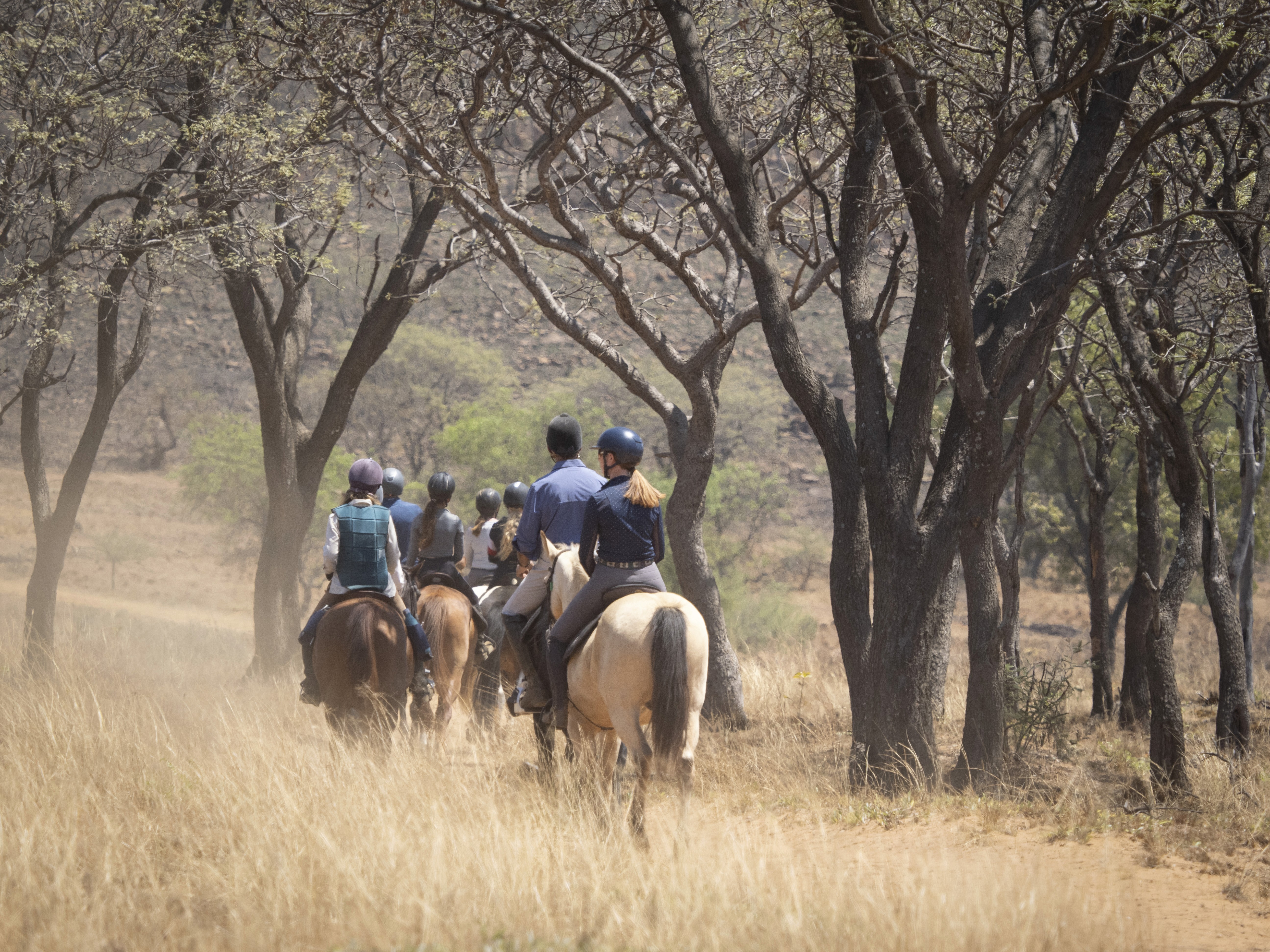
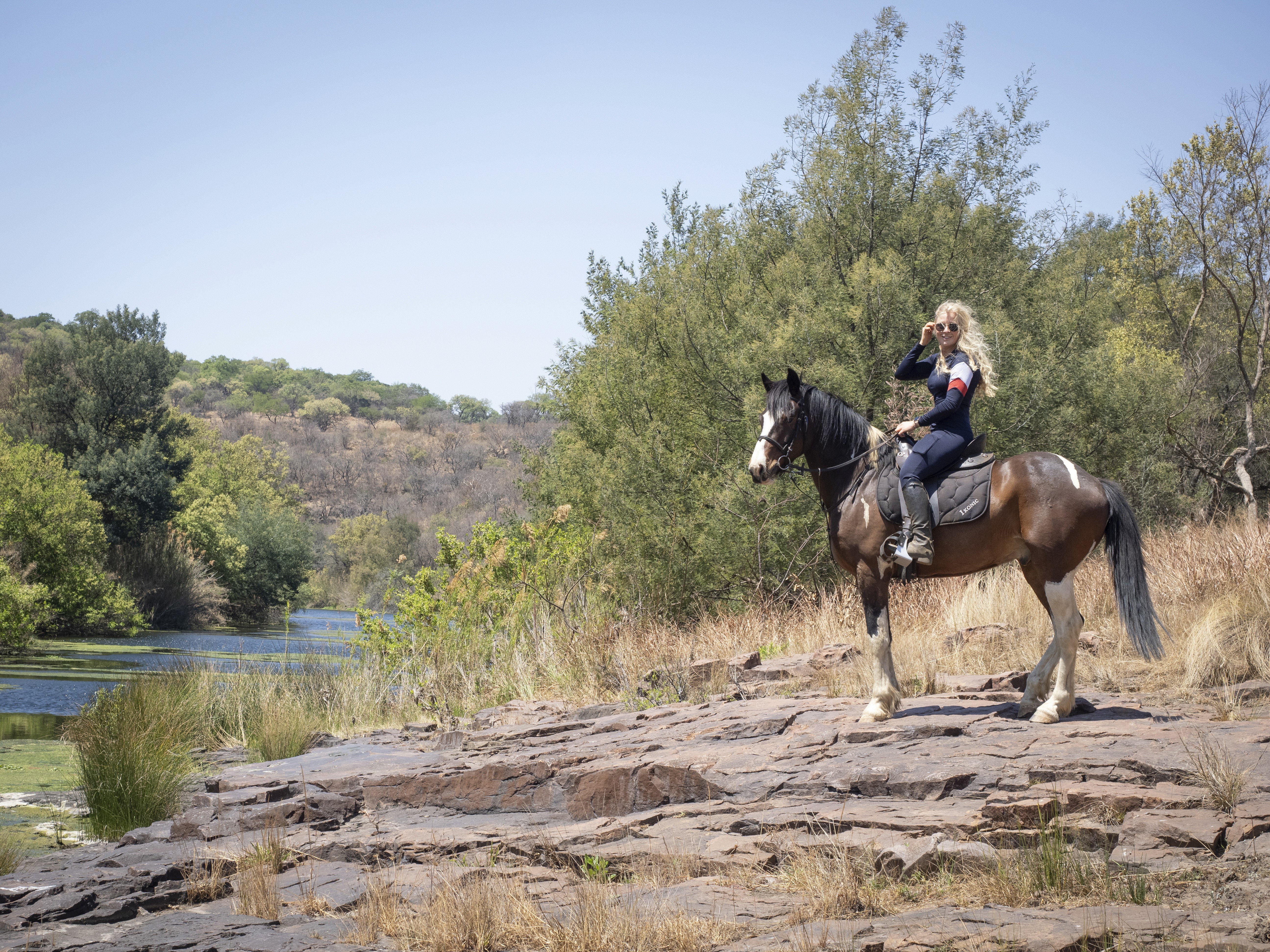
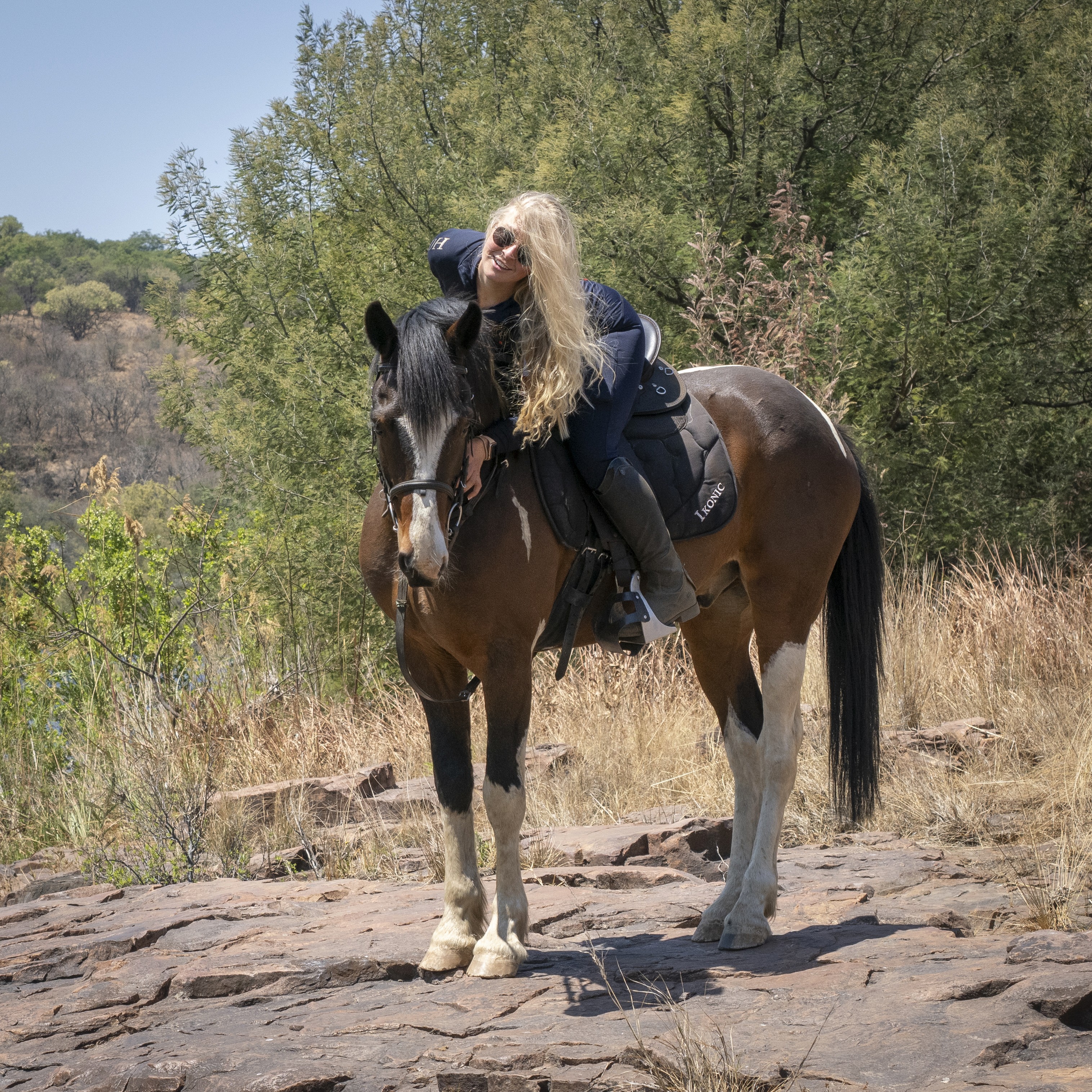
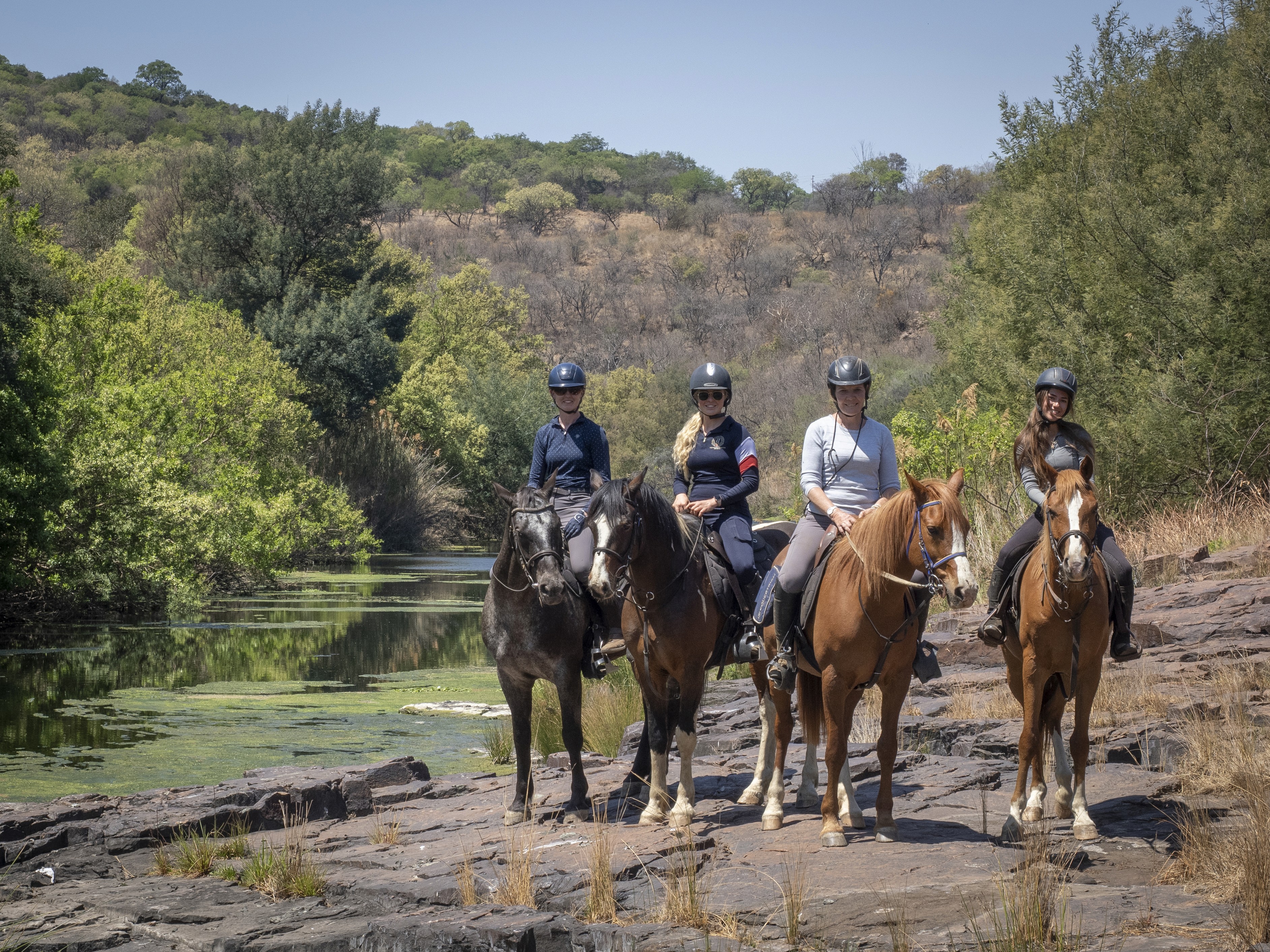
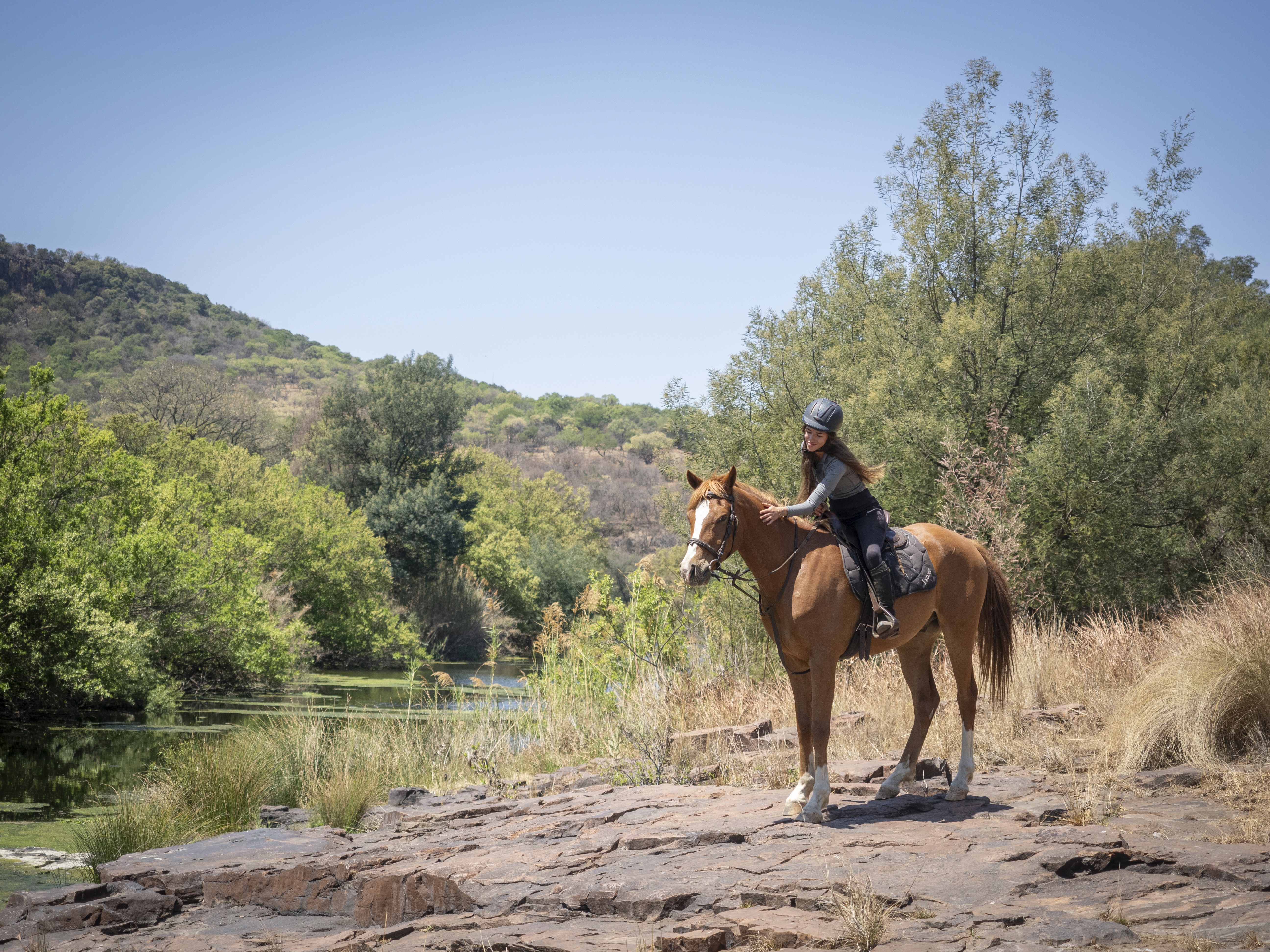
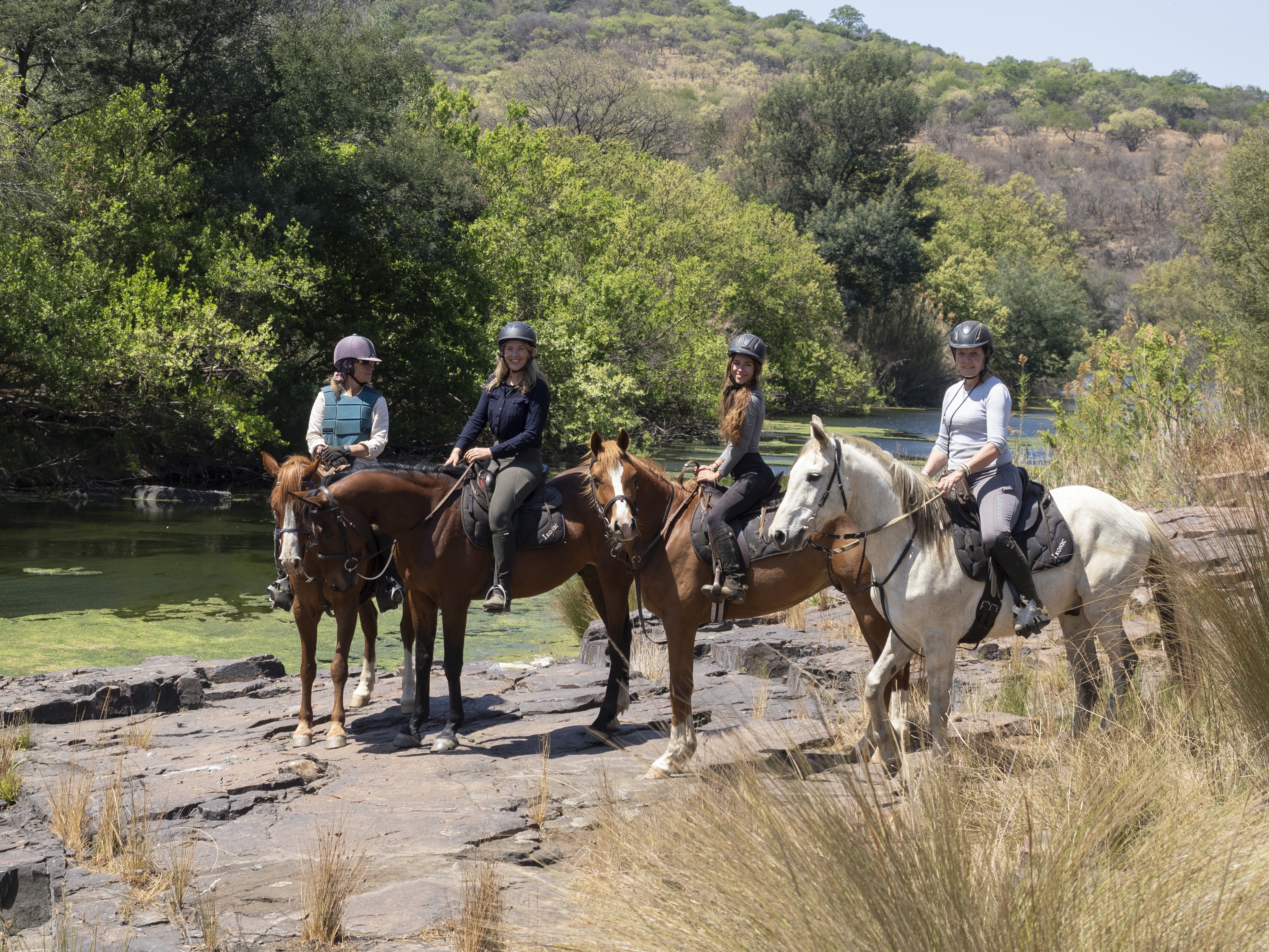
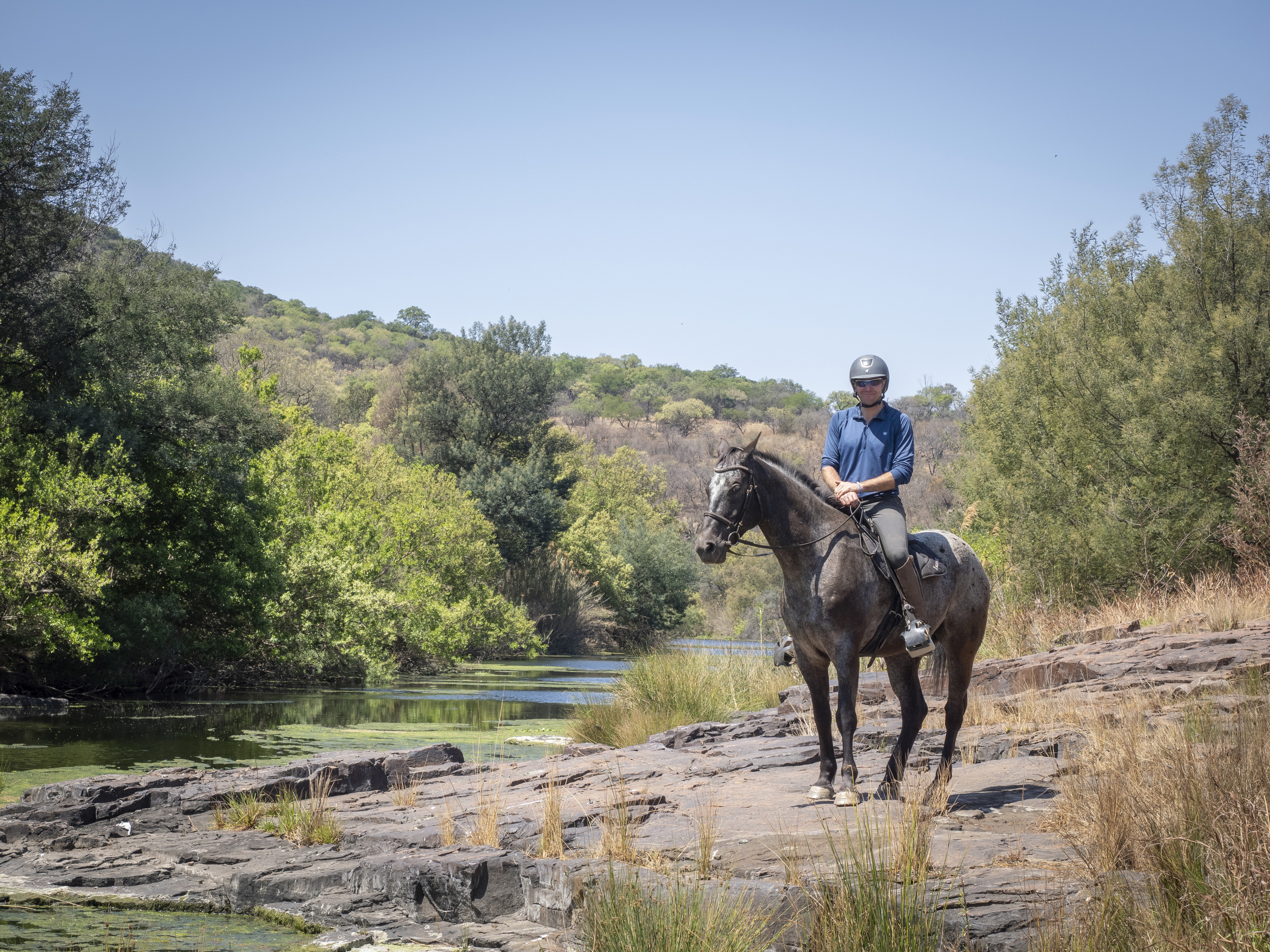
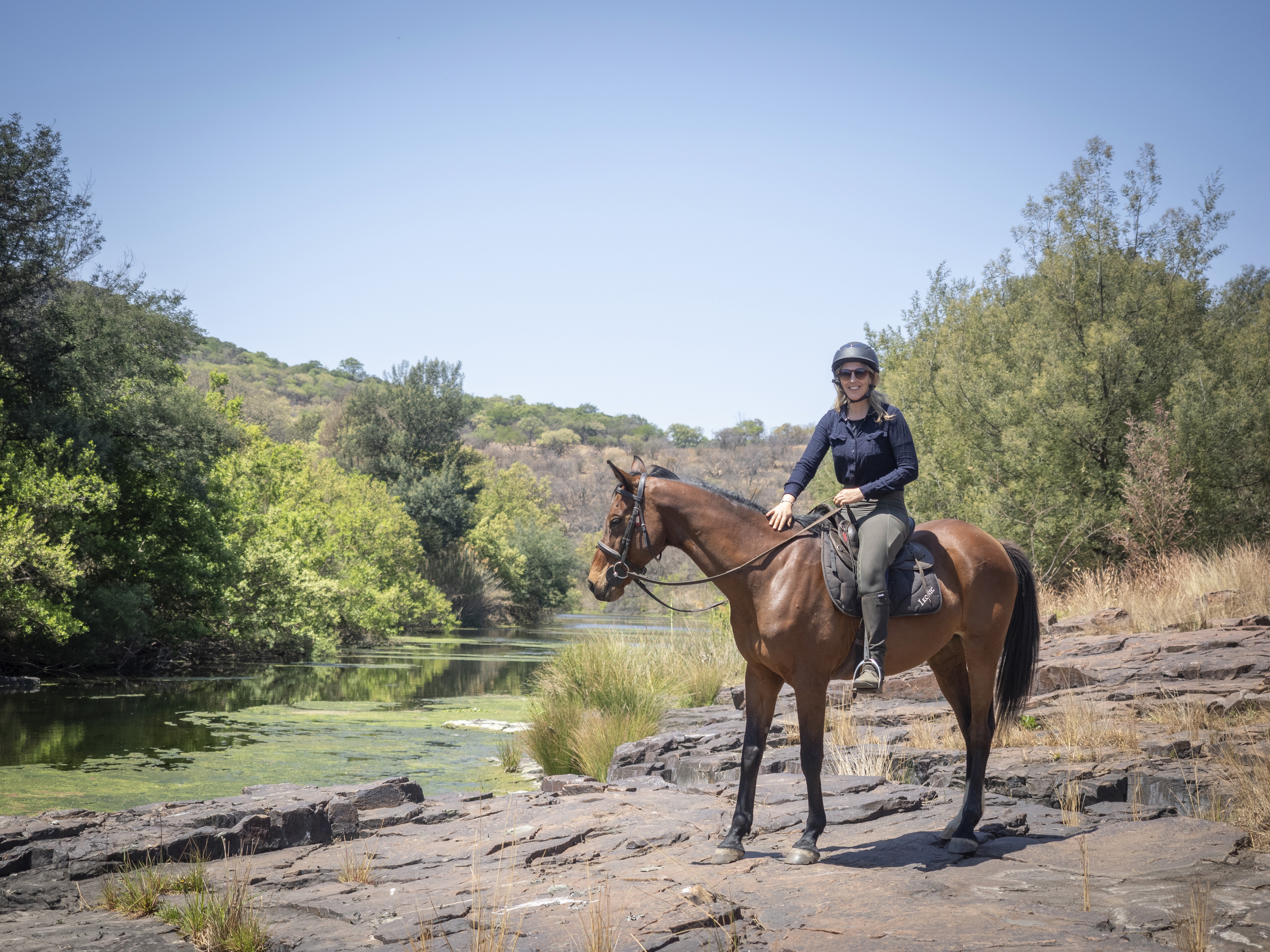
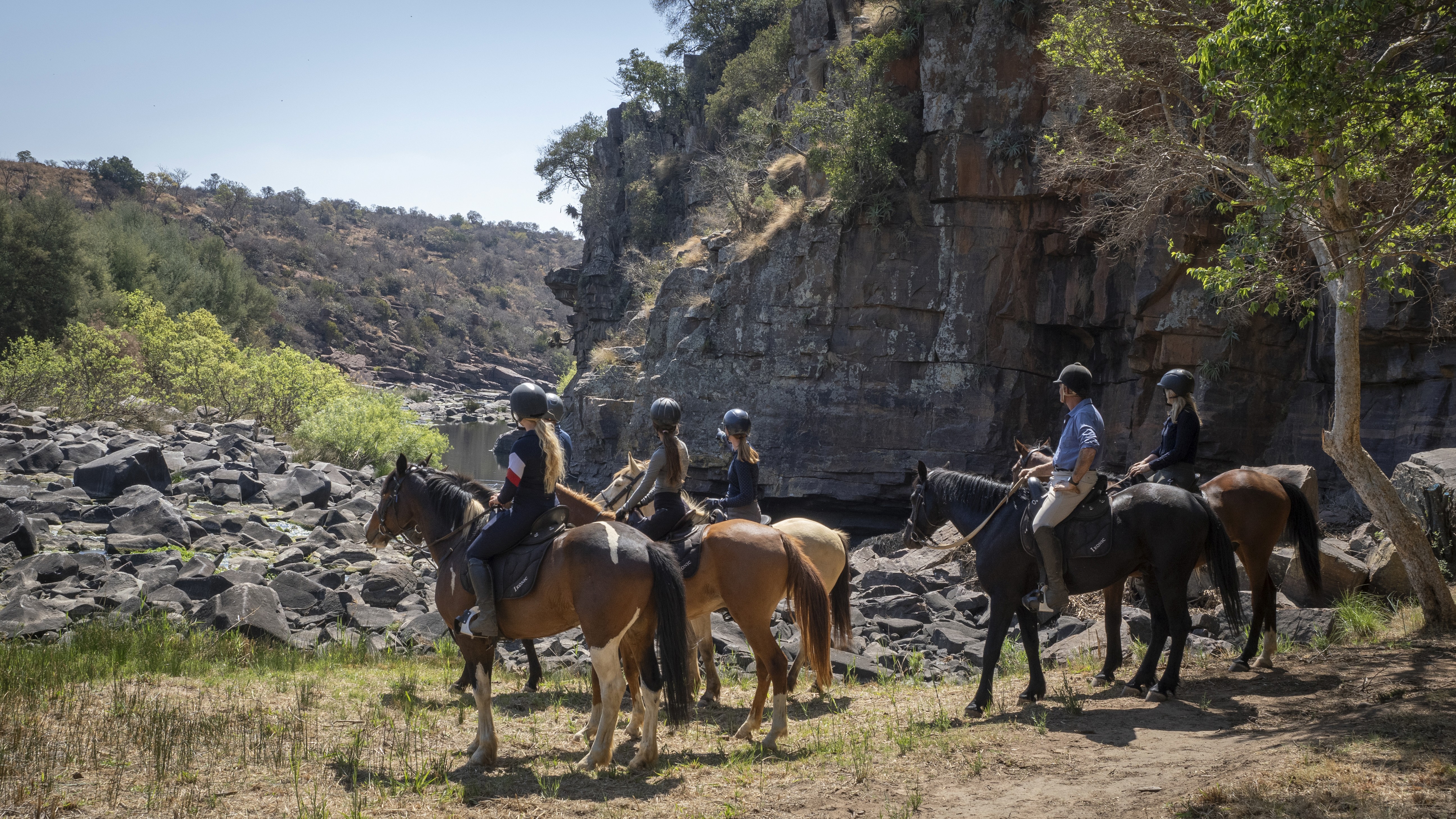
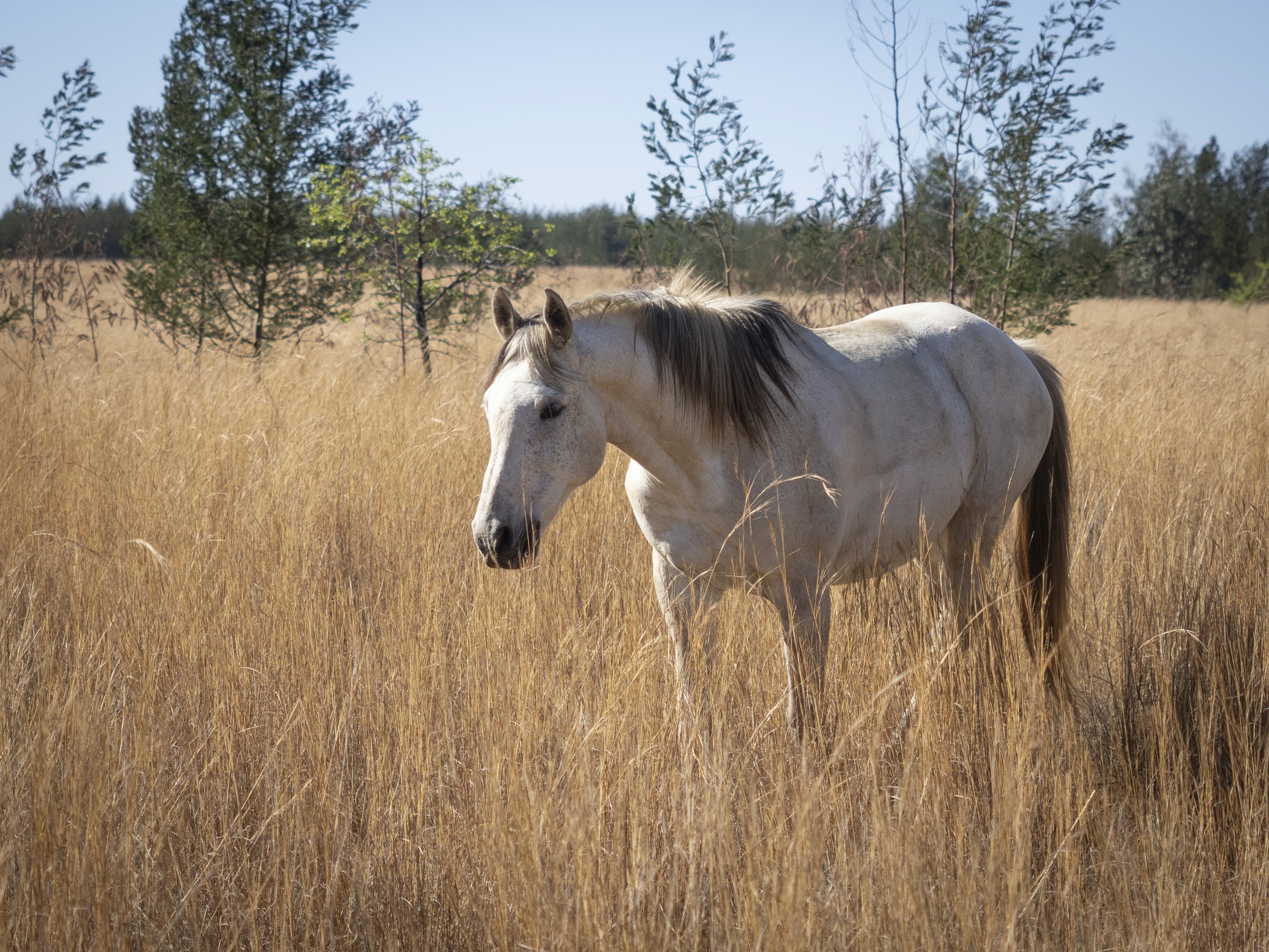
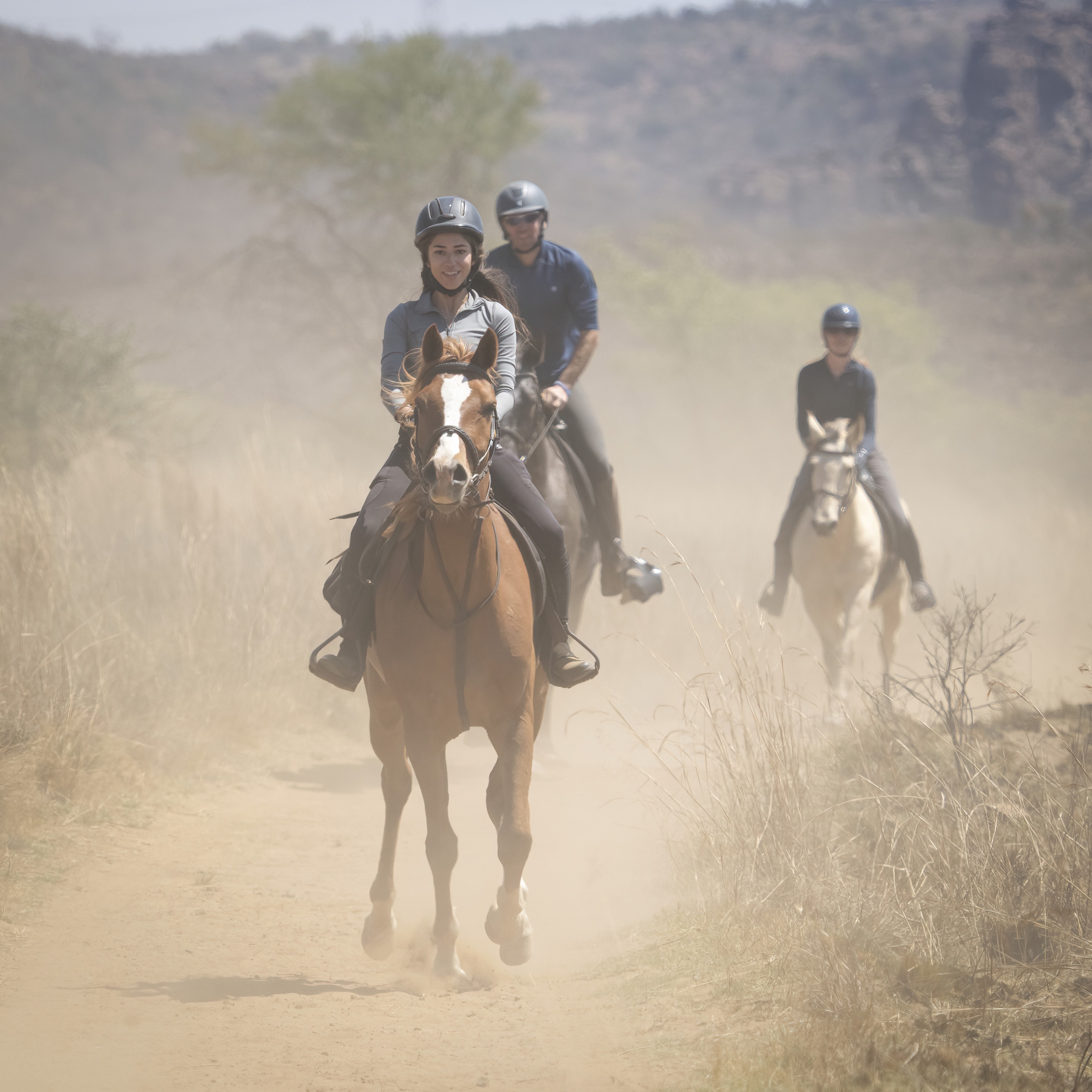
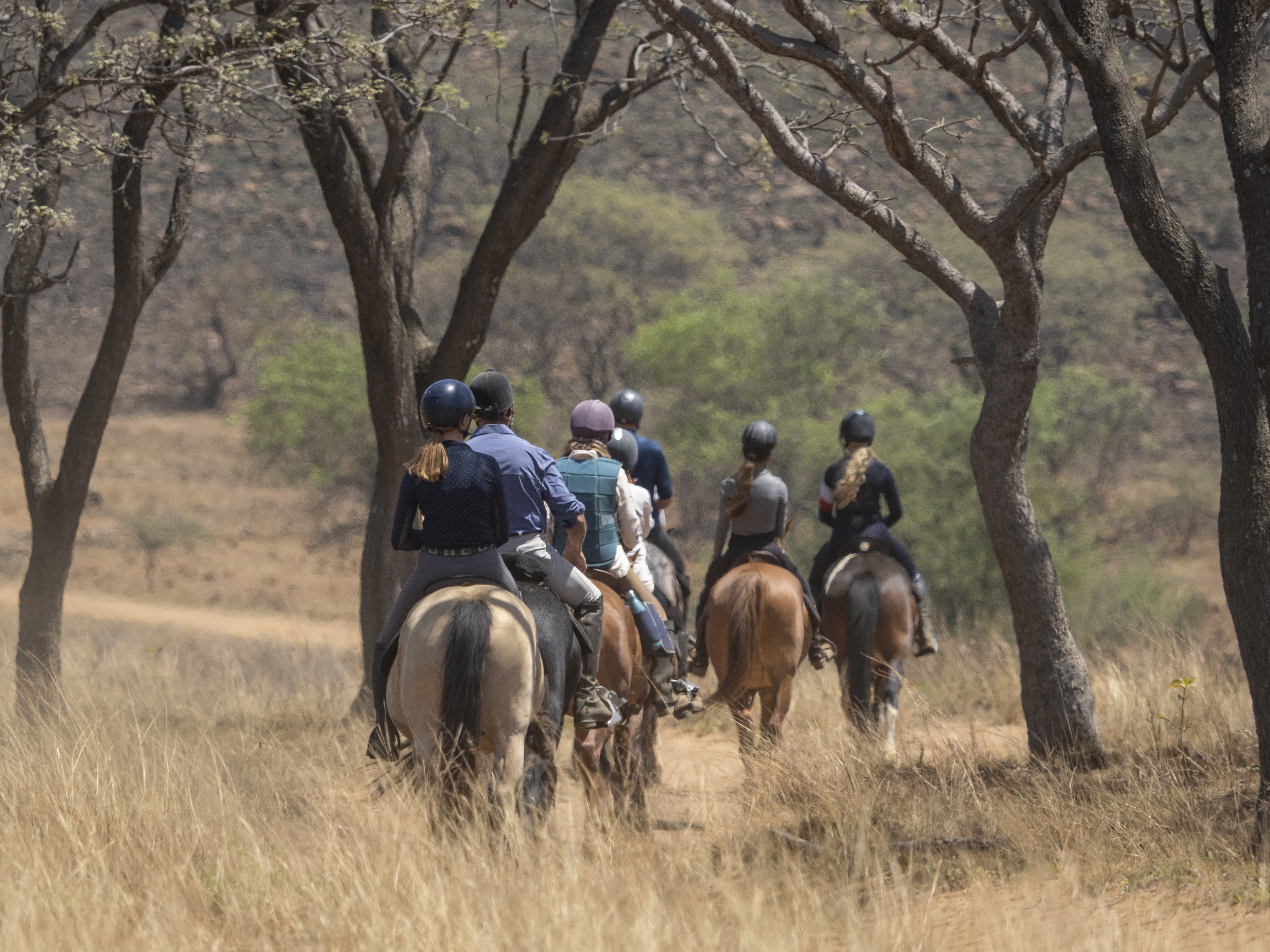
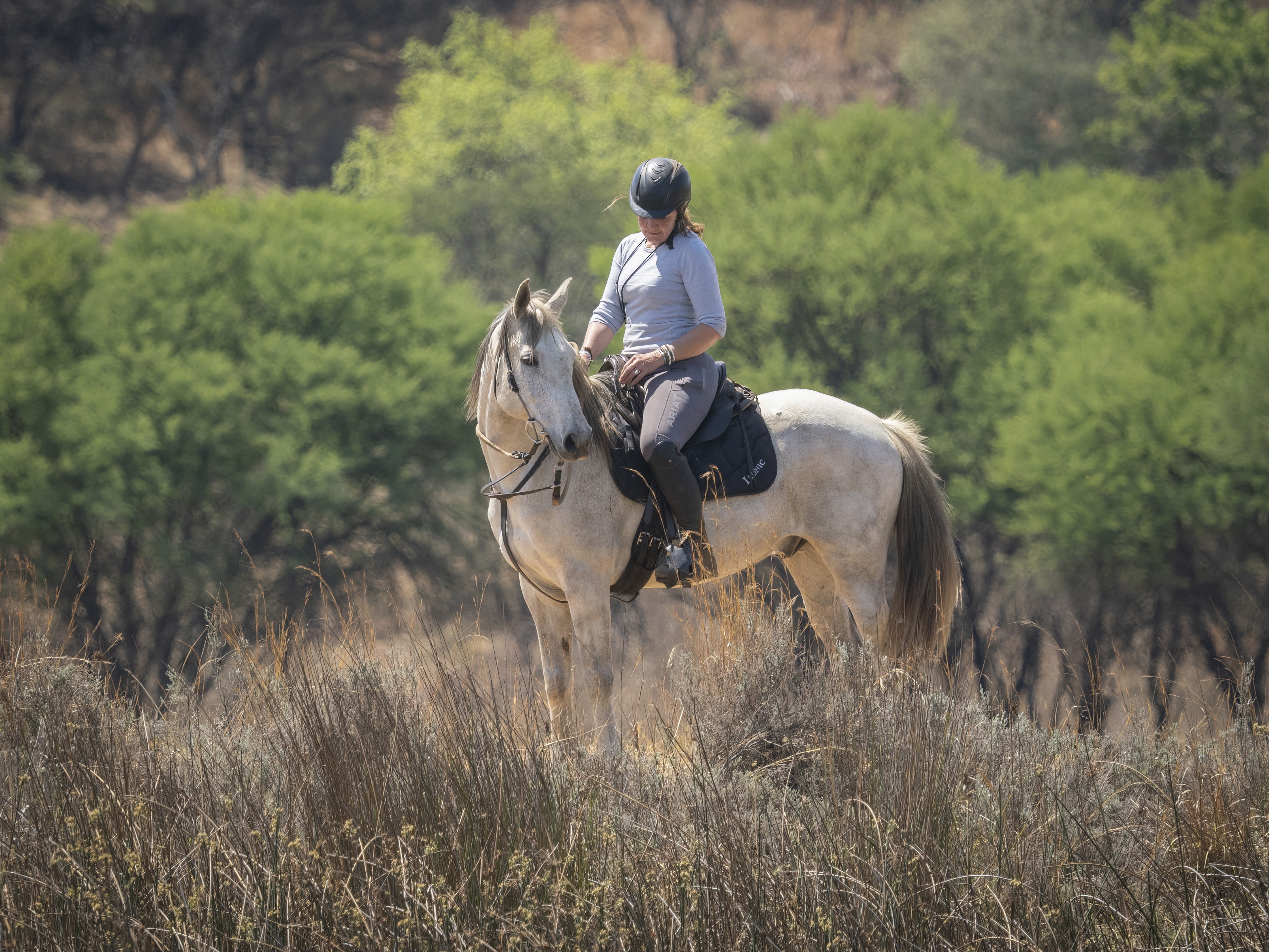
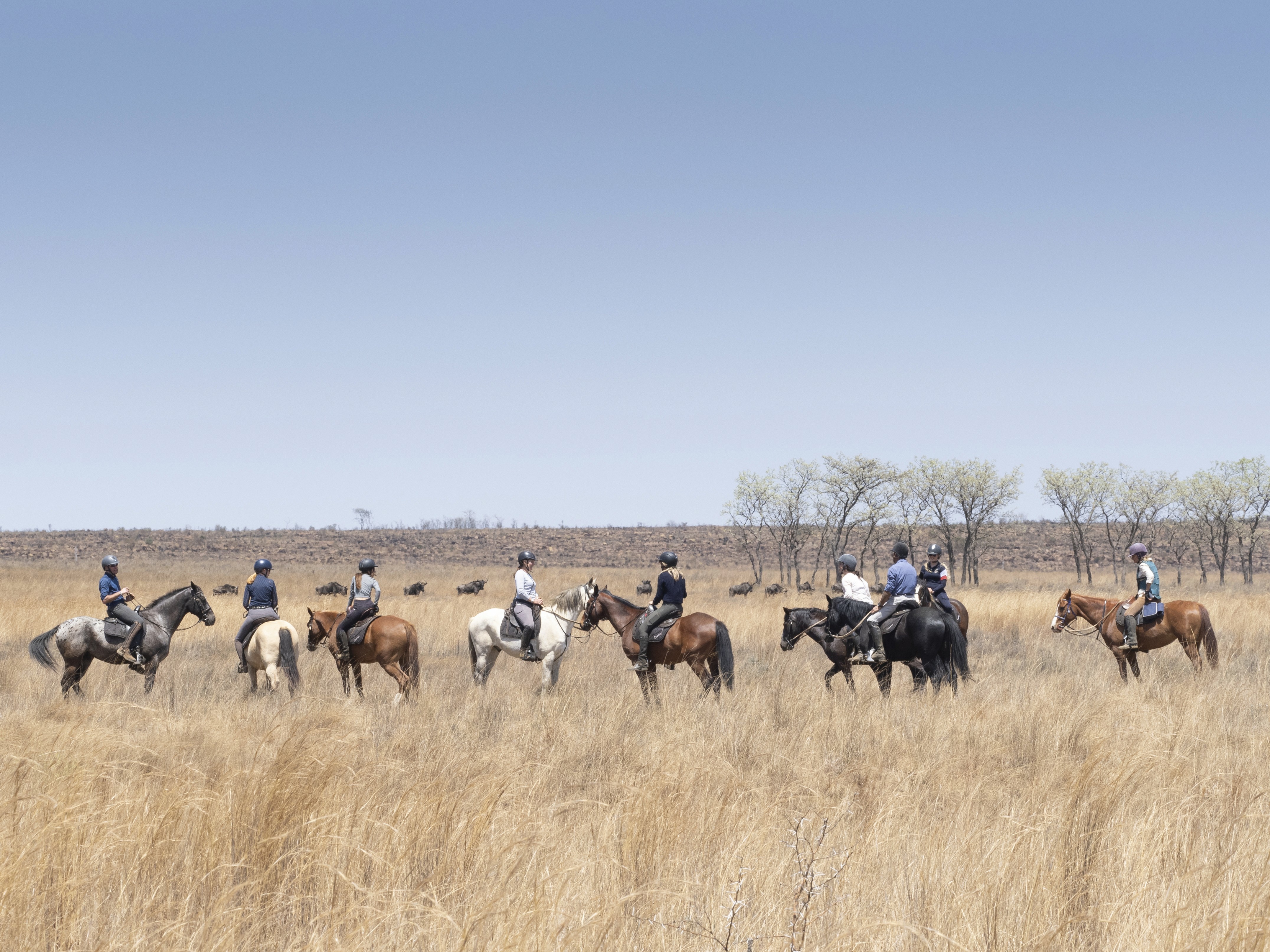
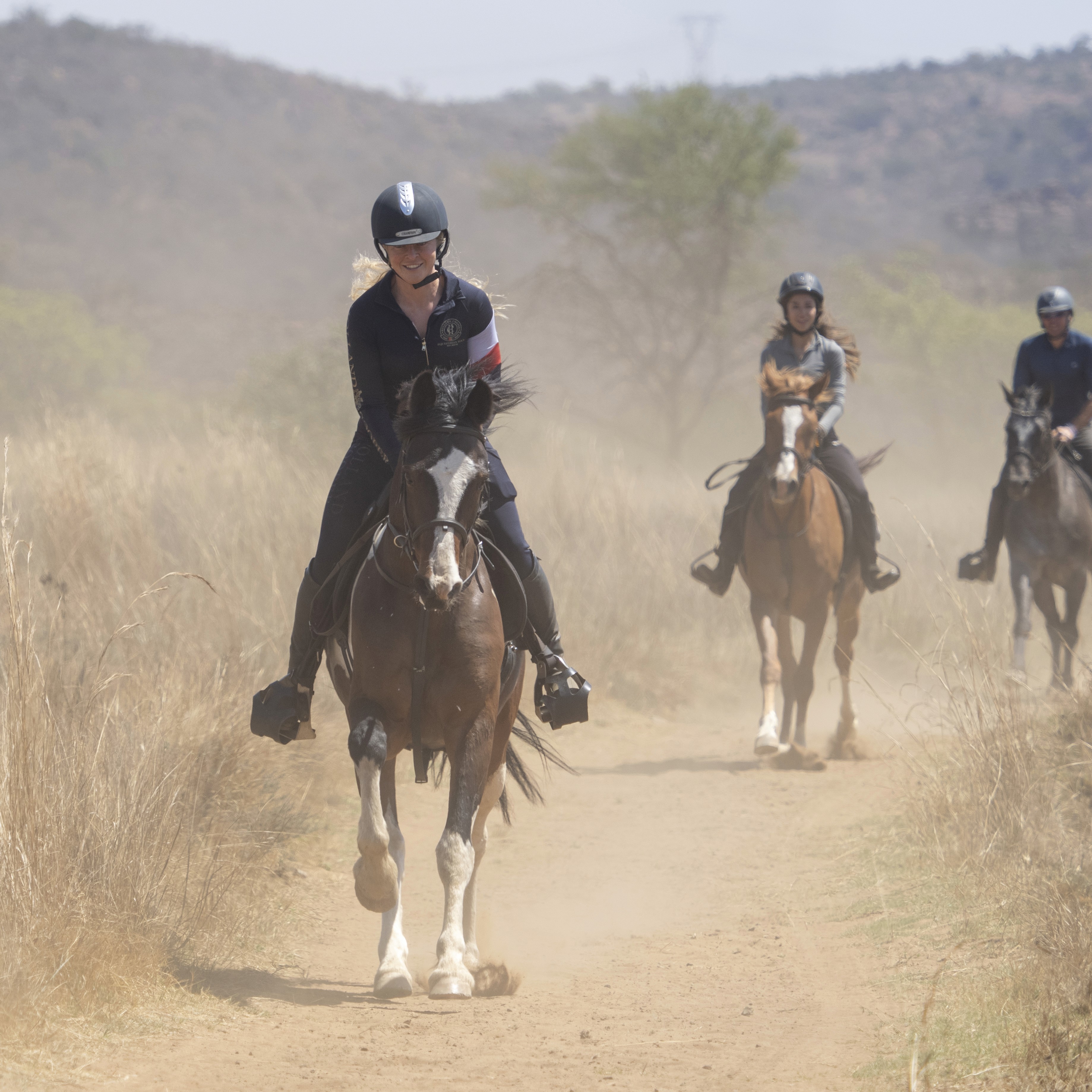
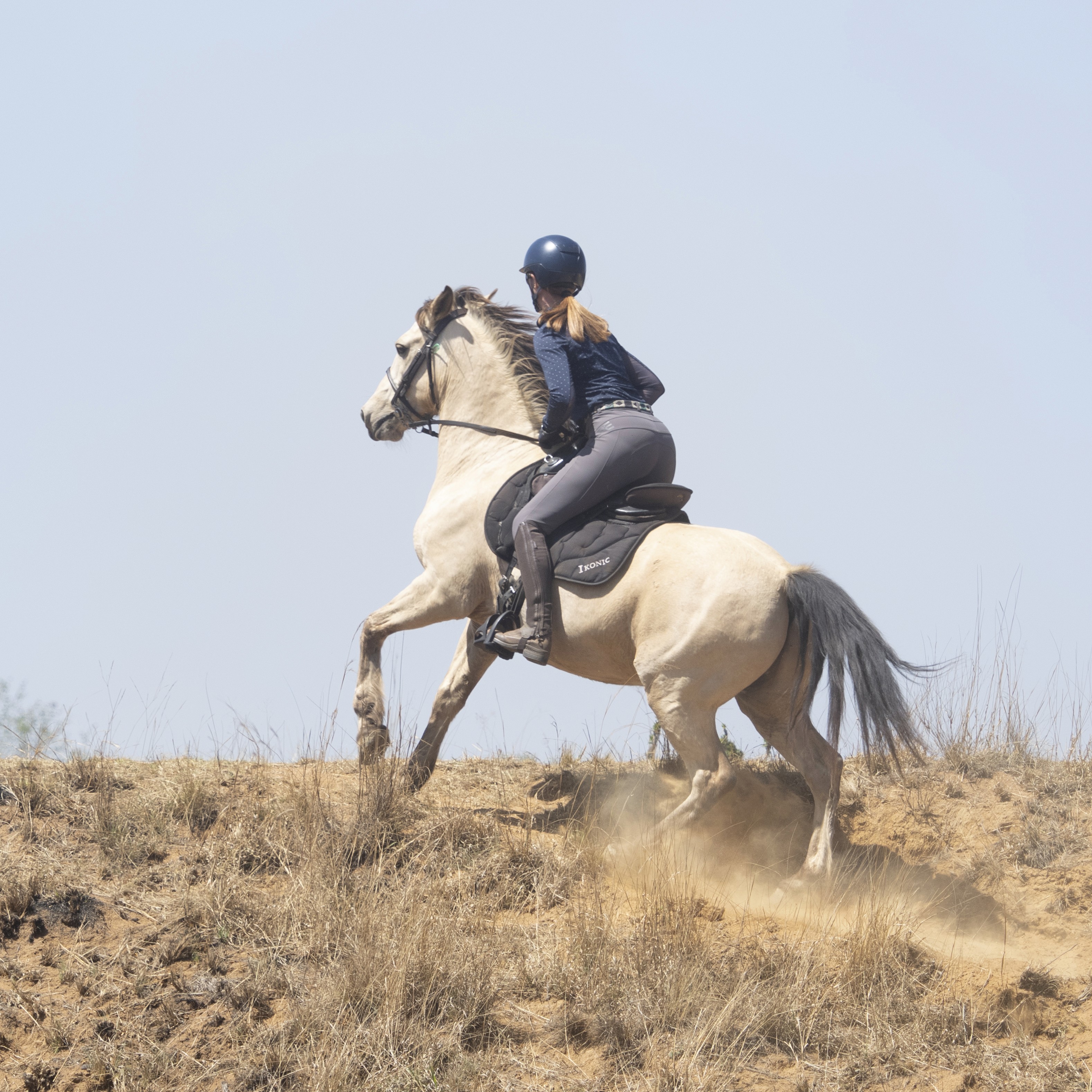
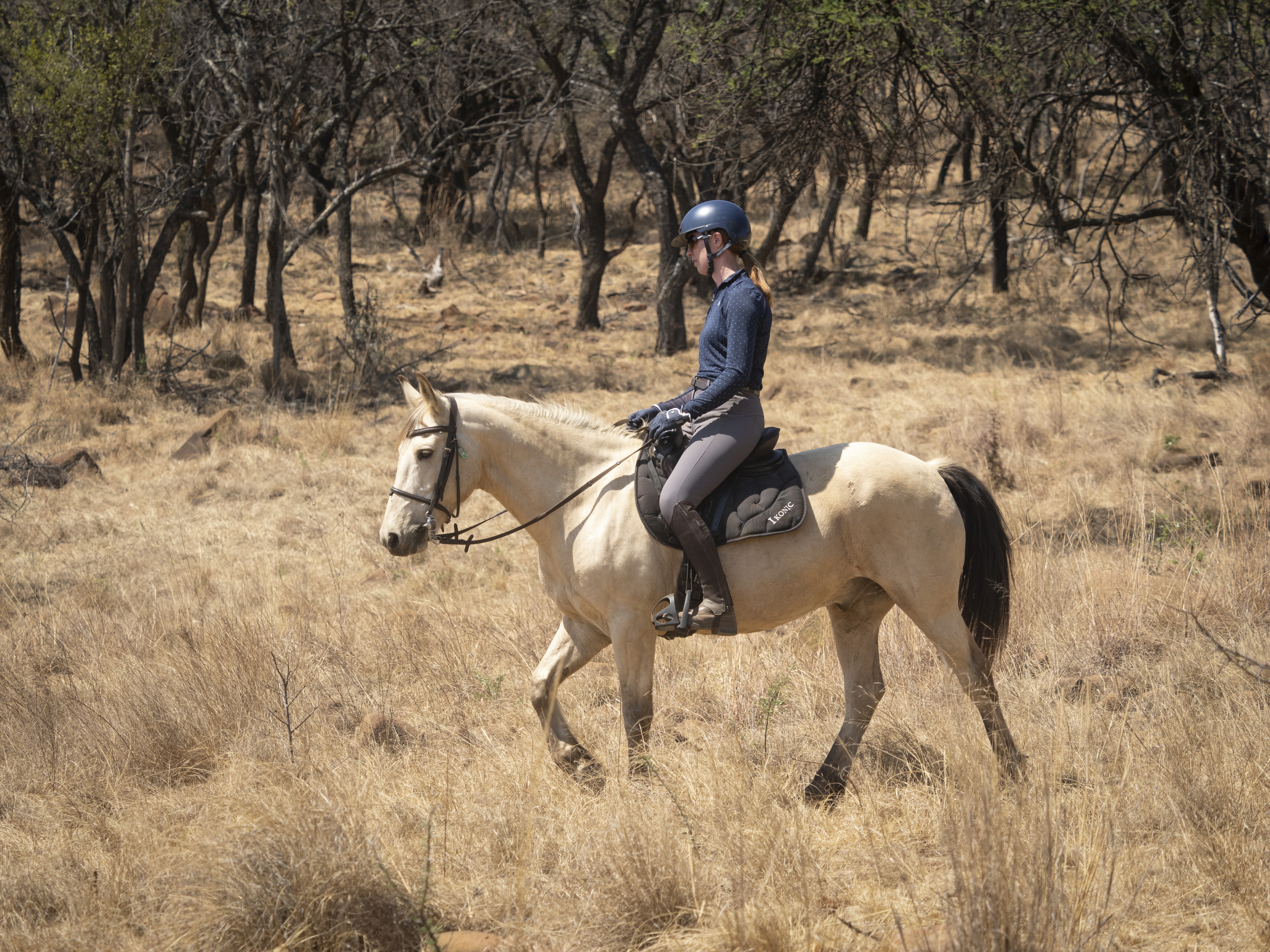
A day at Wild Ride usually begins with breakfast prepared by the staff. It is simple but well cooked and includes, among other things, porridge, yoghurt, fruit, eggs and coffee. The horses are fed early (the responsibility rotates among the guests), and you are responsible for grooming and saddling your horse before the day’s ride. Riding usually starts during the morning and takes place in small groups, suited to experience and pace. Often, you ride one longer trek per day, usually around four hours, but sometimes longer on full-day rides with a picnic in the bush. The landscape is constantly changing – open savannahs, hills, rock formations, river stretches and large waterholes – and the pace is adjusted to the weather and the group. During warmer periods, the riding is planned accordingly, and on some days it ends with bareback swimming in one of the reserve’s three dams. After riding, there is time to recover – rest by the pool, read, take a nap or go for a walk. Lunch is informal and is prepared by the guests themselves using what is available – often leftovers from the evening before, sandwiches, eggs or simple dishes. The days are airy and flexible.
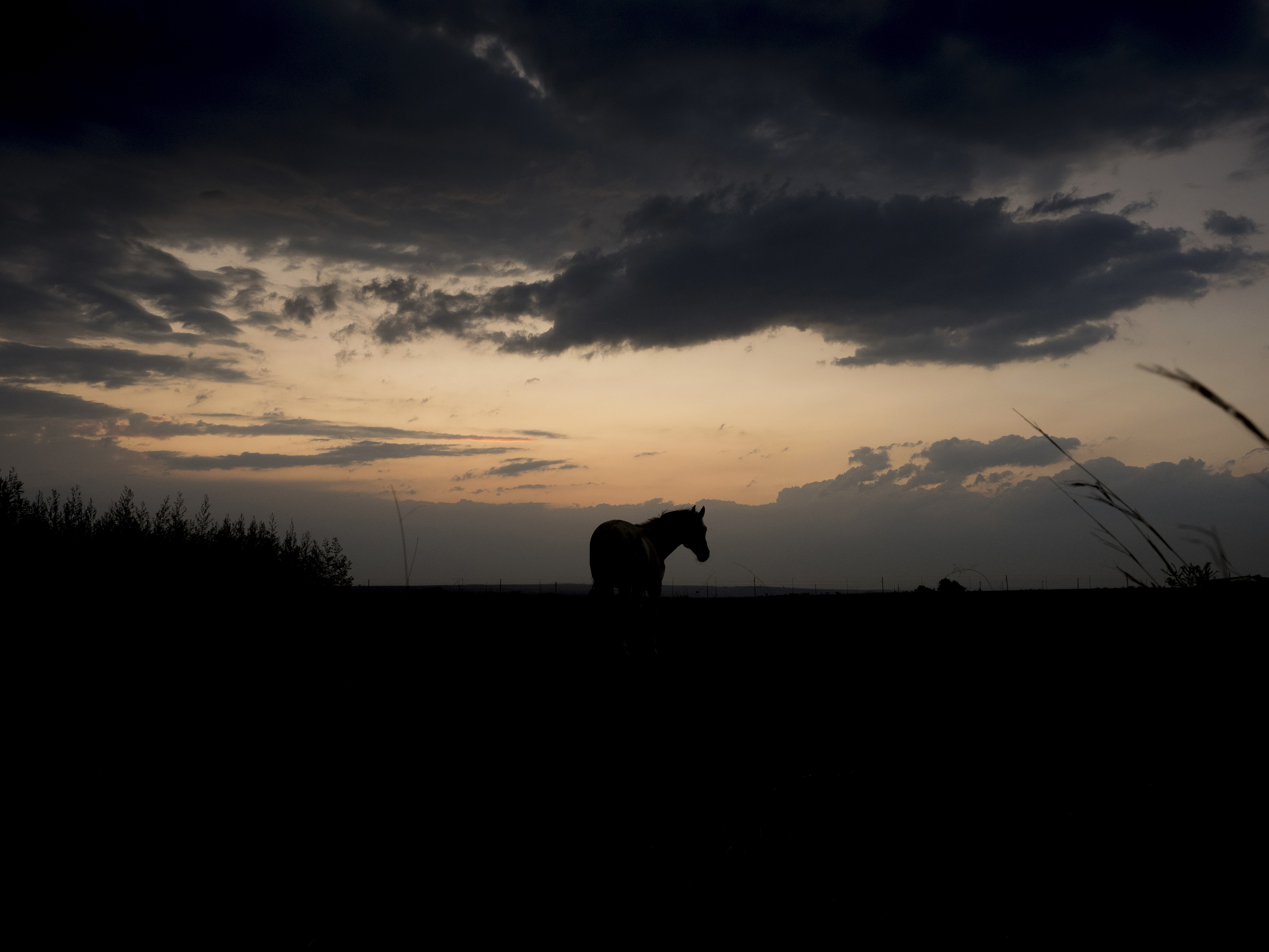
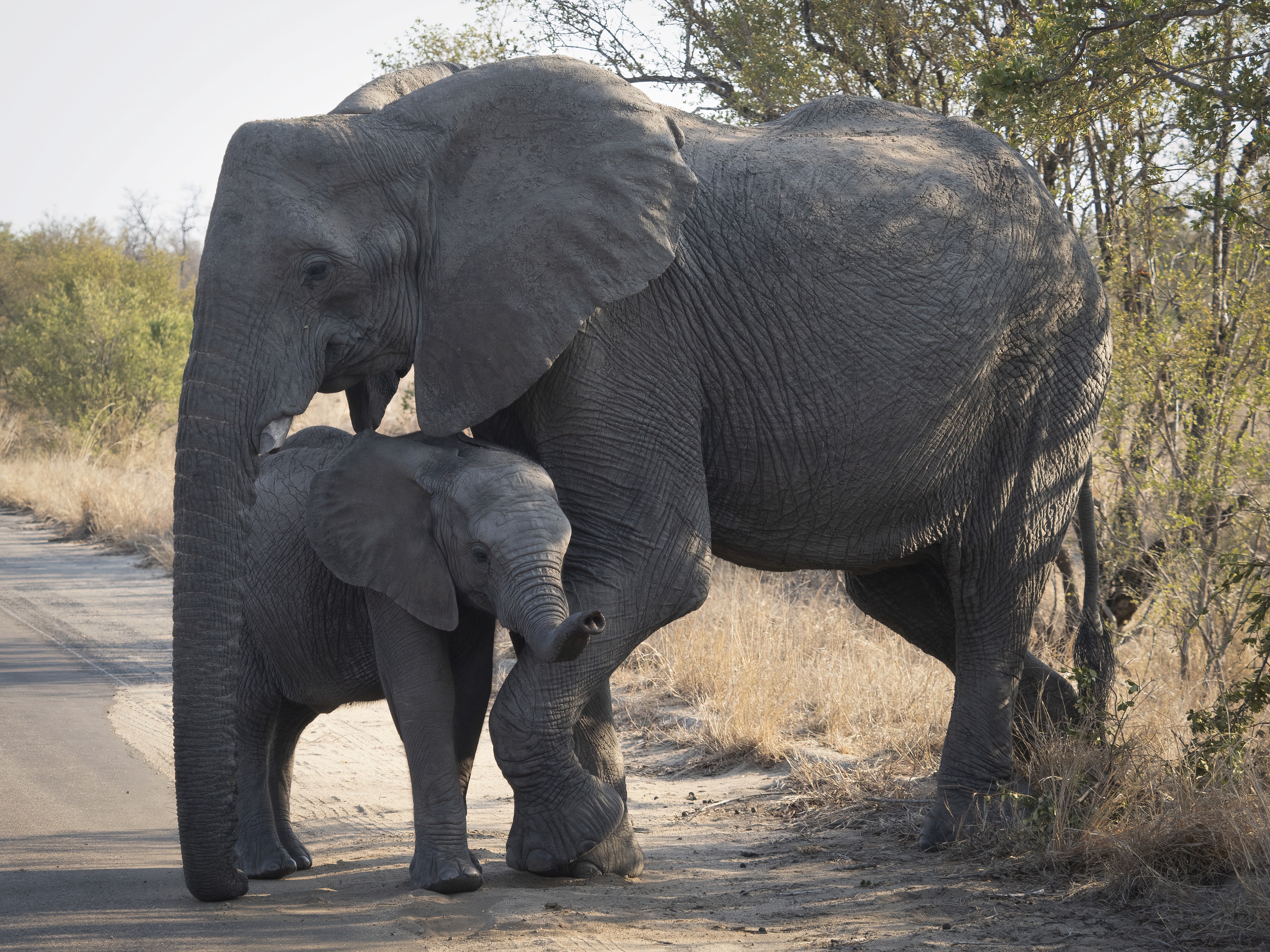
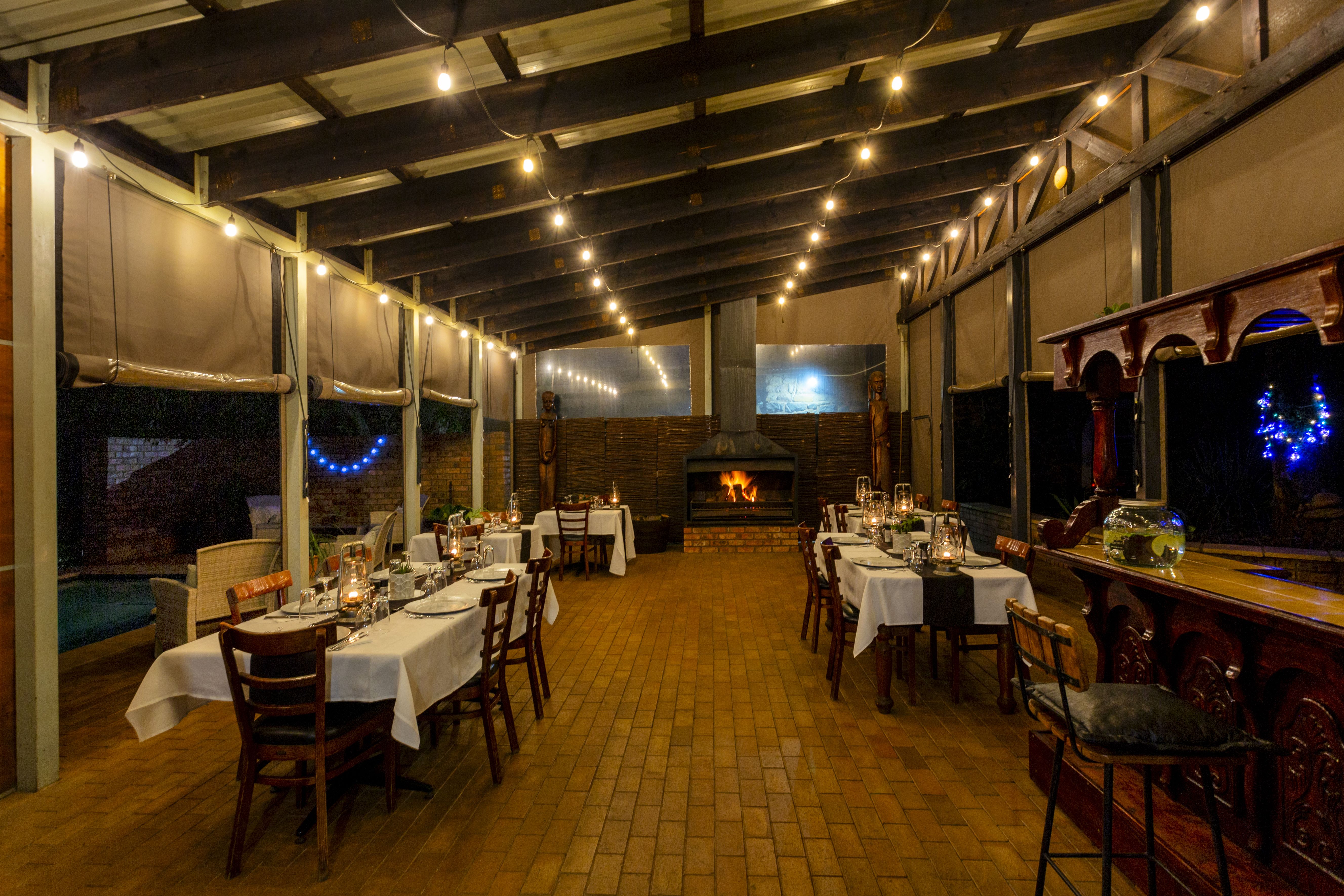
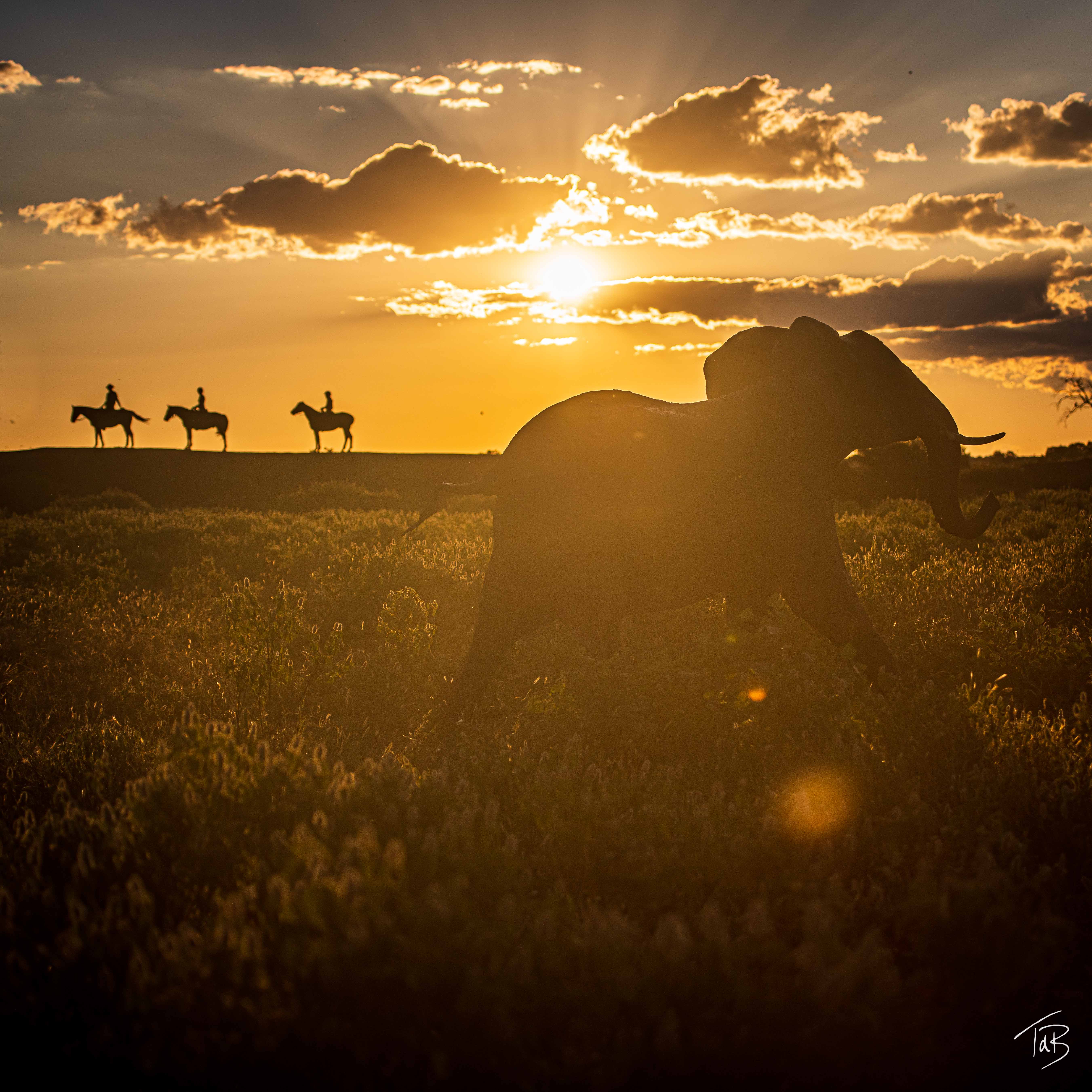
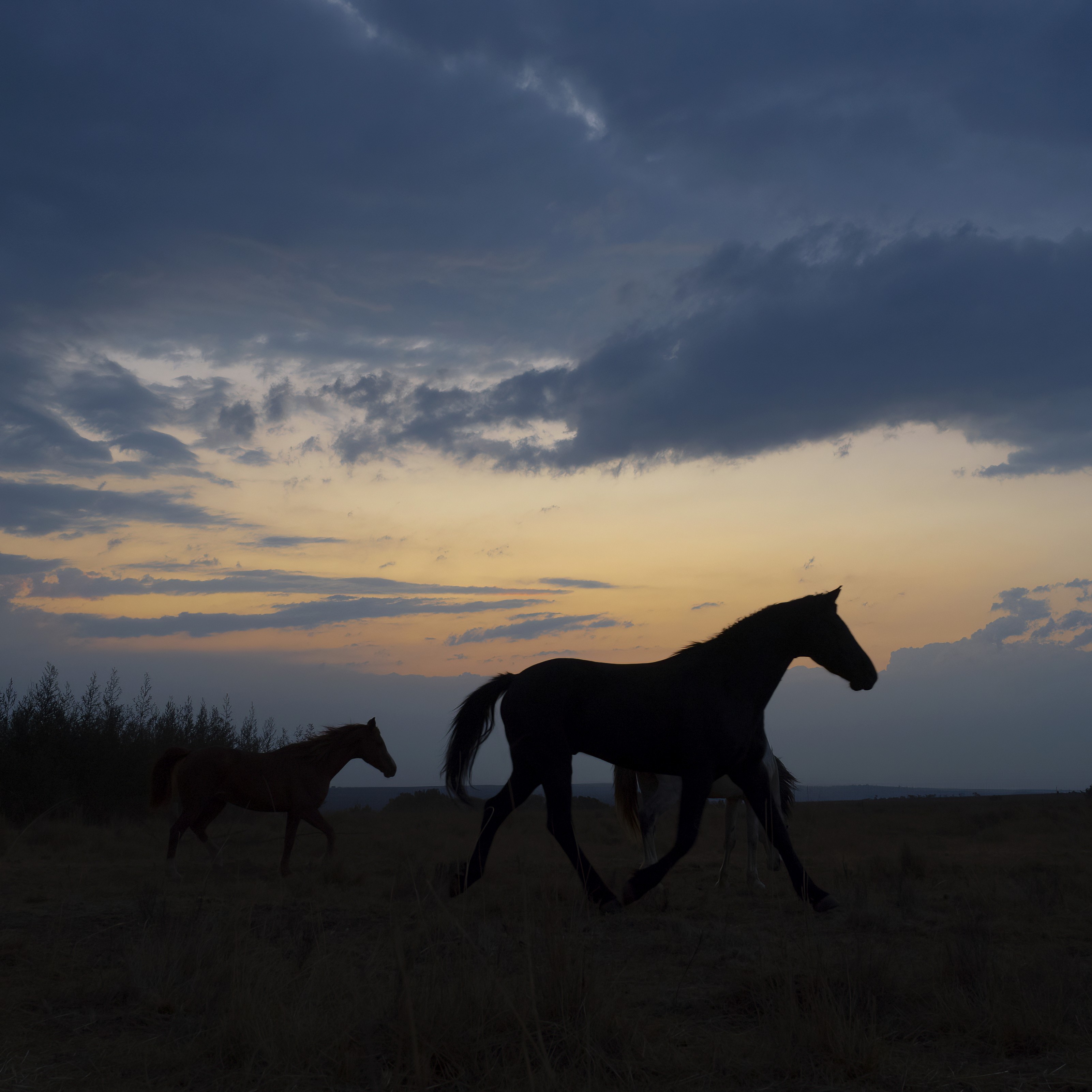
In the evening, everyone gathers again at camp, where dinner is served. It usually consists of home-cooked, nutritious food prepared with a focus on variety and good ingredients. After dinner you can wind down by the fire, talk through the day’s ride, or go to bed early – days in the saddle are long and demanding. On some evenings, when the weather and moon phase allow, full-moon rides are offered, something that is only possible in reserves without the Big Five. In addition to riding, there are several other activities for those who want to relax or take a break from the saddle. In the reserve, walks are offered and it is possible to join town trips for shopping or errands. For those staying longer, there is the option of a 2–3 night excursion to Kruger National Park with game drives, national park visits and experiences with elephants and hippos. All excursions are organised with safety in focus and are led by experienced local partners.

A day at Wild Ride
A day at Wild Ride usually begins with breakfast prepared by the staff. It is simple but well cooked and includes, among other things, porridge, yoghurt, fruit, eggs and coffee. The horses are fed early (the responsibility rotates among the guests), and you are responsible for grooming and saddling your horse before the day’s ride. Riding usually starts during the morning and takes place in small groups, suited to experience and pace. Often, you ride one longer trek per day, usually around four hours, but sometimes longer on full-day rides with a picnic in the bush. The landscape is constantly changing – open savannahs, hills, rock formations, river stretches and large waterholes – and the pace is adjusted to the weather and the group. During warmer periods, the riding is planned accordingly, and on some days it ends with bareback swimming in one of the reserve’s three dams. After riding, there is time to recover – rest by the pool, read, take a nap or go for a walk. Lunch is informal and is prepared by the guests themselves using what is available – often leftovers from the evening before, sandwiches, eggs or simple dishes. The days are airy and flexible.
In the evening, everyone gathers again at camp, where dinner is served. It usually consists of home-cooked, nutritious food prepared with a focus on variety and good ingredients. After dinner you can wind down by the fire, talk through the day’s ride, or go to bed early – days in the saddle are long and demanding. On some evenings, when the weather and moon phase allow, full-moon rides are offered, something that is only possible in reserves without the Big Five. In addition to riding, there are several other activities for those who want to relax or take a break from the saddle. In the reserve, walks are offered and it is possible to join town trips for shopping or errands. For those staying longer, there is the option of a 2–3 night excursion to Kruger National Park with game drives, national park visits and experiences with elephants and hippos. All excursions are organised with safety in focus and are led by experienced local partners.

A day at Wild Ride
A day at Wild Ride usually begins with breakfast prepared by the staff. It is simple but well cooked and includes, among other things, porridge, yoghurt, fruit, eggs and coffee. The horses are fed early (the responsibility rotates among the guests), and you are responsible for grooming and saddling your horse before the day’s ride. Riding usually starts during the morning and takes place in small groups, suited to experience and pace. Often, you ride one longer trek per day, usually around four hours, but sometimes longer on full-day rides with a picnic in the bush. The landscape is constantly changing – open savannahs, hills, rock formations, river stretches and large waterholes – and the pace is adjusted to the weather and the group. During warmer periods, the riding is planned accordingly, and on some days it ends with bareback swimming in one of the reserve’s three dams. After riding, there is time to recover – rest by the pool, read, take a nap or go for a walk. Lunch is informal and is prepared by the guests themselves using what is available – often leftovers from the evening before, sandwiches, eggs or simple dishes. The days are airy and flexible.
In the evening, everyone gathers again at camp, where dinner is served. It usually consists of home-cooked, nutritious food prepared with a focus on variety and good ingredients. After dinner you can wind down by the fire, talk through the day’s ride, or go to bed early – days in the saddle are long and demanding. On some evenings, when the weather and moon phase allow, full-moon rides are offered, something that is only possible in reserves without the Big Five. In addition to riding, there are several other activities for those who want to relax or take a break from the saddle. In the reserve, walks are offered and it is possible to join town trips for shopping or errands. For those staying longer, there is the option of a 2–3 night excursion to Kruger National Park with game drives, national park visits and experiences with elephants and hippos. All excursions are organised with safety in focus and are led by experienced local partners.

A day at Wild Ride
A day at Wild Ride usually begins with breakfast prepared by the staff. It is simple but well cooked and includes, among other things, porridge, yoghurt, fruit, eggs and coffee. The horses are fed early (the responsibility rotates among the guests), and you are responsible for grooming and saddling your horse before the day’s ride. Riding usually starts during the morning and takes place in small groups, suited to experience and pace. Often, you ride one longer trek per day, usually around four hours, but sometimes longer on full-day rides with a picnic in the bush. The landscape is constantly changing – open savannahs, hills, rock formations, river stretches and large waterholes – and the pace is adjusted to the weather and the group. During warmer periods, the riding is planned accordingly, and on some days it ends with bareback swimming in one of the reserve’s three dams. After riding, there is time to recover – rest by the pool, read, take a nap or go for a walk. Lunch is informal and is prepared by the guests themselves using what is available – often leftovers from the evening before, sandwiches, eggs or simple dishes. The days are airy and flexible.
In the evening, everyone gathers again at camp, where dinner is served. It usually consists of home-cooked, nutritious food prepared with a focus on variety and good ingredients. After dinner you can wind down by the fire, talk through the day’s ride, or go to bed early – days in the saddle are long and demanding. On some evenings, when the weather and moon phase allow, full-moon rides are offered, something that is only possible in reserves without the Big Five. In addition to riding, there are several other activities for those who want to relax or take a break from the saddle. In the reserve, walks are offered and it is possible to join town trips for shopping or errands. For those staying longer, there is the option of a 2–3 night excursion to Kruger National Park with game drives, national park visits and experiences with elephants and hippos. All excursions are organised with safety in focus and are led by experienced local partners.

A day at Wild Ride
A day at Wild Ride usually begins with breakfast prepared by the staff. It is simple but well cooked and includes, among other things, porridge, yoghurt, fruit, eggs and coffee. The horses are fed early (the responsibility rotates among the guests), and you are responsible for grooming and saddling your horse before the day’s ride. Riding usually starts during the morning and takes place in small groups, suited to experience and pace. Often, you ride one longer trek per day, usually around four hours, but sometimes longer on full-day rides with a picnic in the bush. The landscape is constantly changing – open savannahs, hills, rock formations, river stretches and large waterholes – and the pace is adjusted to the weather and the group. During warmer periods, the riding is planned accordingly, and on some days it ends with bareback swimming in one of the reserve’s three dams. After riding, there is time to recover – rest by the pool, read, take a nap or go for a walk. Lunch is informal and is prepared by the guests themselves using what is available – often leftovers from the evening before, sandwiches, eggs or simple dishes. The days are airy and flexible.
In the evening, everyone gathers again at camp, where dinner is served. It usually consists of home-cooked, nutritious food prepared with a focus on variety and good ingredients. After dinner you can wind down by the fire, talk through the day’s ride, or go to bed early – days in the saddle are long and demanding. On some evenings, when the weather and moon phase allow, full-moon rides are offered, something that is only possible in reserves without the Big Five. In addition to riding, there are several other activities for those who want to relax or take a break from the saddle. In the reserve, walks are offered and it is possible to join town trips for shopping or errands. For those staying longer, there is the option of a 2–3 night excursion to Kruger National Park with game drives, national park visits and experiences with elephants and hippos. All excursions are organised with safety in focus and are led by experienced local partners.

A day at Wild Ride
A day at Wild Ride usually begins with breakfast prepared by the staff. It is simple but well cooked and includes, among other things, porridge, yoghurt, fruit, eggs and coffee. The horses are fed early (the responsibility rotates among the guests), and you are responsible for grooming and saddling your horse before the day’s ride. Riding usually starts during the morning and takes place in small groups, suited to experience and pace. Often, you ride one longer trek per day, usually around four hours, but sometimes longer on full-day rides with a picnic in the bush. The landscape is constantly changing – open savannahs, hills, rock formations, river stretches and large waterholes – and the pace is adjusted to the weather and the group. During warmer periods, the riding is planned accordingly, and on some days it ends with bareback swimming in one of the reserve’s three dams. After riding, there is time to recover – rest by the pool, read, take a nap or go for a walk. Lunch is informal and is prepared by the guests themselves using what is available – often leftovers from the evening before, sandwiches, eggs or simple dishes. The days are airy and flexible.
In the evening, everyone gathers again at camp, where dinner is served. It usually consists of home-cooked, nutritious food prepared with a focus on variety and good ingredients. After dinner you can wind down by the fire, talk through the day’s ride, or go to bed early – days in the saddle are long and demanding. On some evenings, when the weather and moon phase allow, full-moon rides are offered, something that is only possible in reserves without the Big Five. In addition to riding, there are several other activities for those who want to relax or take a break from the saddle. In the reserve, walks are offered and it is possible to join town trips for shopping or errands. For those staying longer, there is the option of a 2–3 night excursion to Kruger National Park with game drives, national park visits and experiences with elephants and hippos. All excursions are organised with safety in focus and are led by experienced local partners.

A day at Wild Ride
A day at Wild Ride usually begins with breakfast prepared by the staff. It is simple but well cooked and includes, among other things, porridge, yoghurt, fruit, eggs and coffee. The horses are fed early (the responsibility rotates among the guests), and you are responsible for grooming and saddling your horse before the day’s ride. Riding usually starts during the morning and takes place in small groups, suited to experience and pace. Often, you ride one longer trek per day, usually around four hours, but sometimes longer on full-day rides with a picnic in the bush. The landscape is constantly changing – open savannahs, hills, rock formations, river stretches and large waterholes – and the pace is adjusted to the weather and the group. During warmer periods, the riding is planned accordingly, and on some days it ends with bareback swimming in one of the reserve’s three dams. After riding, there is time to recover – rest by the pool, read, take a nap or go for a walk. Lunch is informal and is prepared by the guests themselves using what is available – often leftovers from the evening before, sandwiches, eggs or simple dishes. The days are airy and flexible.
In the evening, everyone gathers again at camp, where dinner is served. It usually consists of home-cooked, nutritious food prepared with a focus on variety and good ingredients. After dinner you can wind down by the fire, talk through the day’s ride, or go to bed early – days in the saddle are long and demanding. On some evenings, when the weather and moon phase allow, full-moon rides are offered, something that is only possible in reserves without the Big Five. In addition to riding, there are several other activities for those who want to relax or take a break from the saddle. In the reserve, walks are offered and it is possible to join town trips for shopping or errands. For those staying longer, there is the option of a 2–3 night excursion to Kruger National Park with game drives, national park visits and experiences with elephants and hippos. All excursions are organised with safety in focus and are led by experienced local partners.

A day at Wild Ride
A day at Wild Ride usually begins with breakfast prepared by the staff. It is simple but well cooked and includes, among other things, porridge, yoghurt, fruit, eggs and coffee. The horses are fed early (the responsibility rotates among the guests), and you are responsible for grooming and saddling your horse before the day’s ride. Riding usually starts during the morning and takes place in small groups, suited to experience and pace. Often, you ride one longer trek per day, usually around four hours, but sometimes longer on full-day rides with a picnic in the bush. The landscape is constantly changing – open savannahs, hills, rock formations, river stretches and large waterholes – and the pace is adjusted to the weather and the group. During warmer periods, the riding is planned accordingly, and on some days it ends with bareback swimming in one of the reserve’s three dams. After riding, there is time to recover – rest by the pool, read, take a nap or go for a walk. Lunch is informal and is prepared by the guests themselves using what is available – often leftovers from the evening before, sandwiches, eggs or simple dishes. The days are airy and flexible.
In the evening, everyone gathers again at camp, where dinner is served. It usually consists of home-cooked, nutritious food prepared with a focus on variety and good ingredients. After dinner you can wind down by the fire, talk through the day’s ride, or go to bed early – days in the saddle are long and demanding. On some evenings, when the weather and moon phase allow, full-moon rides are offered, something that is only possible in reserves without the Big Five. In addition to riding, there are several other activities for those who want to relax or take a break from the saddle. In the reserve, walks are offered and it is possible to join town trips for shopping or errands. For those staying longer, there is the option of a 2–3 night excursion to Kruger National Park with game drives, national park visits and experiences with elephants and hippos. All excursions are organised with safety in focus and are led by experienced local partners.

A day at Wild Ride
A day at Wild Ride usually begins with breakfast prepared by the staff. It is simple but well cooked and includes, among other things, porridge, yoghurt, fruit, eggs and coffee. The horses are fed early (the responsibility rotates among the guests), and you are responsible for grooming and saddling your horse before the day’s ride. Riding usually starts during the morning and takes place in small groups, suited to experience and pace. Often, you ride one longer trek per day, usually around four hours, but sometimes longer on full-day rides with a picnic in the bush. The landscape is constantly changing – open savannahs, hills, rock formations, river stretches and large waterholes – and the pace is adjusted to the weather and the group. During warmer periods, the riding is planned accordingly, and on some days it ends with bareback swimming in one of the reserve’s three dams. After riding, there is time to recover – rest by the pool, read, take a nap or go for a walk. Lunch is informal and is prepared by the guests themselves using what is available – often leftovers from the evening before, sandwiches, eggs or simple dishes. The days are airy and flexible.
In the evening, everyone gathers again at camp, where dinner is served. It usually consists of home-cooked, nutritious food prepared with a focus on variety and good ingredients. After dinner you can wind down by the fire, talk through the day’s ride, or go to bed early – days in the saddle are long and demanding. On some evenings, when the weather and moon phase allow, full-moon rides are offered, something that is only possible in reserves without the Big Five. In addition to riding, there are several other activities for those who want to relax or take a break from the saddle. In the reserve, walks are offered and it is possible to join town trips for shopping or errands. For those staying longer, there is the option of a 2–3 night excursion to Kruger National Park with game drives, national park visits and experiences with elephants and hippos. All excursions are organised with safety in focus and are led by experienced local partners.

A day at Wild Ride
A day at Wild Ride usually begins with breakfast prepared by the staff. It is simple but well cooked and includes, among other things, porridge, yoghurt, fruit, eggs and coffee. The horses are fed early (the responsibility rotates among the guests), and you are responsible for grooming and saddling your horse before the day’s ride. Riding usually starts during the morning and takes place in small groups, suited to experience and pace. Often, you ride one longer trek per day, usually around four hours, but sometimes longer on full-day rides with a picnic in the bush. The landscape is constantly changing – open savannahs, hills, rock formations, river stretches and large waterholes – and the pace is adjusted to the weather and the group. During warmer periods, the riding is planned accordingly, and on some days it ends with bareback swimming in one of the reserve’s three dams. After riding, there is time to recover – rest by the pool, read, take a nap or go for a walk. Lunch is informal and is prepared by the guests themselves using what is available – often leftovers from the evening before, sandwiches, eggs or simple dishes. The days are airy and flexible.
In the evening, everyone gathers again at camp, where dinner is served. It usually consists of home-cooked, nutritious food prepared with a focus on variety and good ingredients. After dinner you can wind down by the fire, talk through the day’s ride, or go to bed early – days in the saddle are long and demanding. On some evenings, when the weather and moon phase allow, full-moon rides are offered, something that is only possible in reserves without the Big Five. In addition to riding, there are several other activities for those who want to relax or take a break from the saddle. In the reserve, walks are offered and it is possible to join town trips for shopping or errands. For those staying longer, there is the option of a 2–3 night excursion to Kruger National Park with game drives, national park visits and experiences with elephants and hippos. All excursions are organised with safety in focus and are led by experienced local partners.

A day at Wild Ride
A day at Wild Ride usually begins with breakfast prepared by the staff. It is simple but well cooked and includes, among other things, porridge, yoghurt, fruit, eggs and coffee. The horses are fed early (the responsibility rotates among the guests), and you are responsible for grooming and saddling your horse before the day’s ride. Riding usually starts during the morning and takes place in small groups, suited to experience and pace. Often, you ride one longer trek per day, usually around four hours, but sometimes longer on full-day rides with a picnic in the bush. The landscape is constantly changing – open savannahs, hills, rock formations, river stretches and large waterholes – and the pace is adjusted to the weather and the group. During warmer periods, the riding is planned accordingly, and on some days it ends with bareback swimming in one of the reserve’s three dams. After riding, there is time to recover – rest by the pool, read, take a nap or go for a walk. Lunch is informal and is prepared by the guests themselves using what is available – often leftovers from the evening before, sandwiches, eggs or simple dishes. The days are airy and flexible.
In the evening, everyone gathers again at camp, where dinner is served. It usually consists of home-cooked, nutritious food prepared with a focus on variety and good ingredients. After dinner you can wind down by the fire, talk through the day’s ride, or go to bed early – days in the saddle are long and demanding. On some evenings, when the weather and moon phase allow, full-moon rides are offered, something that is only possible in reserves without the Big Five. In addition to riding, there are several other activities for those who want to relax or take a break from the saddle. In the reserve, walks are offered and it is possible to join town trips for shopping or errands. For those staying longer, there is the option of a 2–3 night excursion to Kruger National Park with game drives, national park visits and experiences with elephants and hippos. All excursions are organised with safety in focus and are led by experienced local partners.

A day at Wild Ride
A day at Wild Ride usually begins with breakfast prepared by the staff. It is simple but well cooked and includes, among other things, porridge, yoghurt, fruit, eggs and coffee. The horses are fed early (the responsibility rotates among the guests), and you are responsible for grooming and saddling your horse before the day’s ride. Riding usually starts during the morning and takes place in small groups, suited to experience and pace. Often, you ride one longer trek per day, usually around four hours, but sometimes longer on full-day rides with a picnic in the bush. The landscape is constantly changing – open savannahs, hills, rock formations, river stretches and large waterholes – and the pace is adjusted to the weather and the group. During warmer periods, the riding is planned accordingly, and on some days it ends with bareback swimming in one of the reserve’s three dams. After riding, there is time to recover – rest by the pool, read, take a nap or go for a walk. Lunch is informal and is prepared by the guests themselves using what is available – often leftovers from the evening before, sandwiches, eggs or simple dishes. The days are airy and flexible.
In the evening, everyone gathers again at camp, where dinner is served. It usually consists of home-cooked, nutritious food prepared with a focus on variety and good ingredients. After dinner you can wind down by the fire, talk through the day’s ride, or go to bed early – days in the saddle are long and demanding. On some evenings, when the weather and moon phase allow, full-moon rides are offered, something that is only possible in reserves without the Big Five. In addition to riding, there are several other activities for those who want to relax or take a break from the saddle. In the reserve, walks are offered and it is possible to join town trips for shopping or errands. For those staying longer, there is the option of a 2–3 night excursion to Kruger National Park with game drives, national park visits and experiences with elephants and hippos. All excursions are organised with safety in focus and are led by experienced local partners.
More information
Food and drinks
Food and drinks
Horses and equipment
Riding, riding level and hours in the saddle
Guides and safety
Guides and safety
Laundry service
Laundry service
Climate
Climate
Passport and visa
Passport and visa
Health Recommendations
Practical information

About Bezhoek Private Nature Reserve
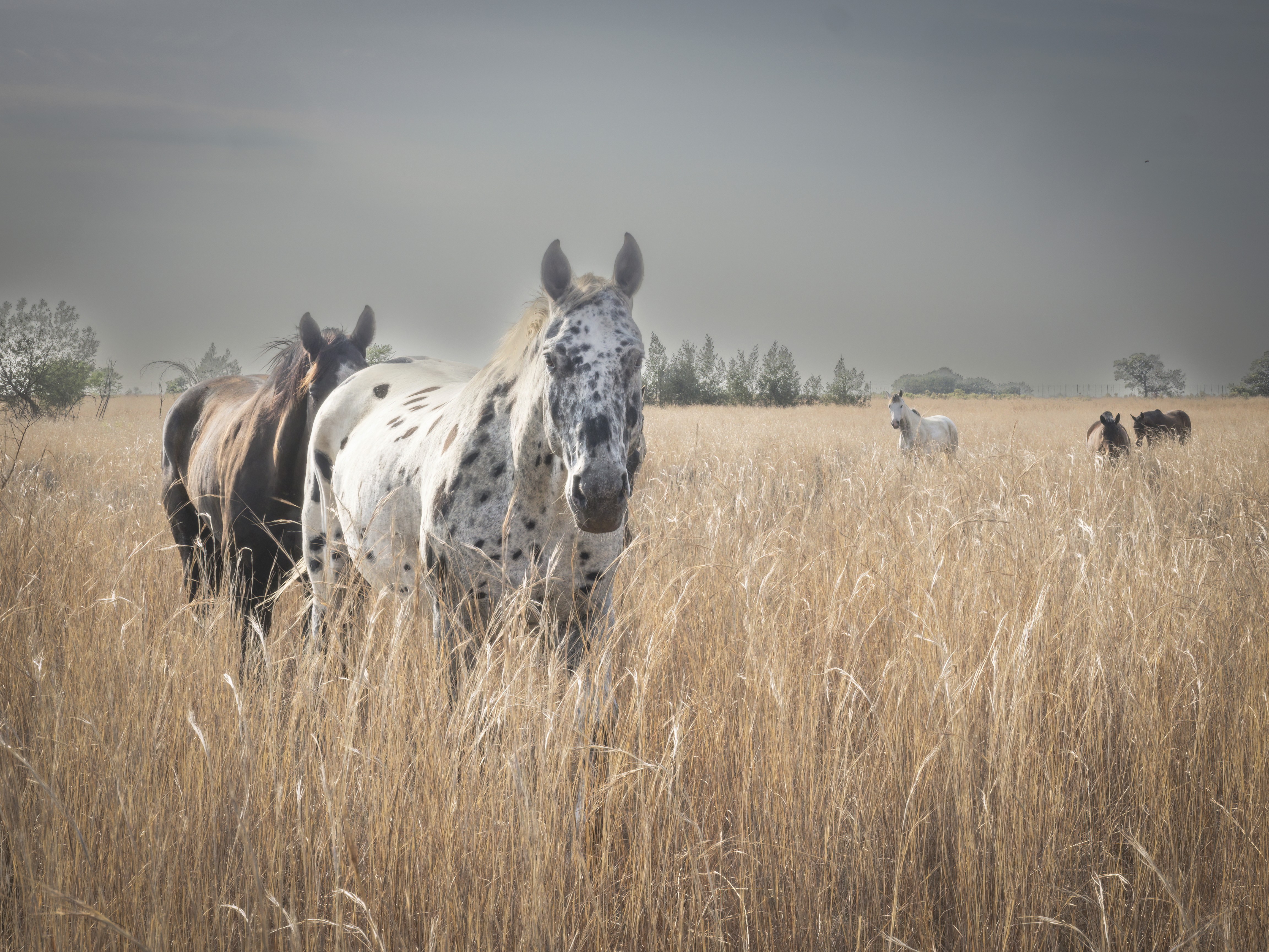
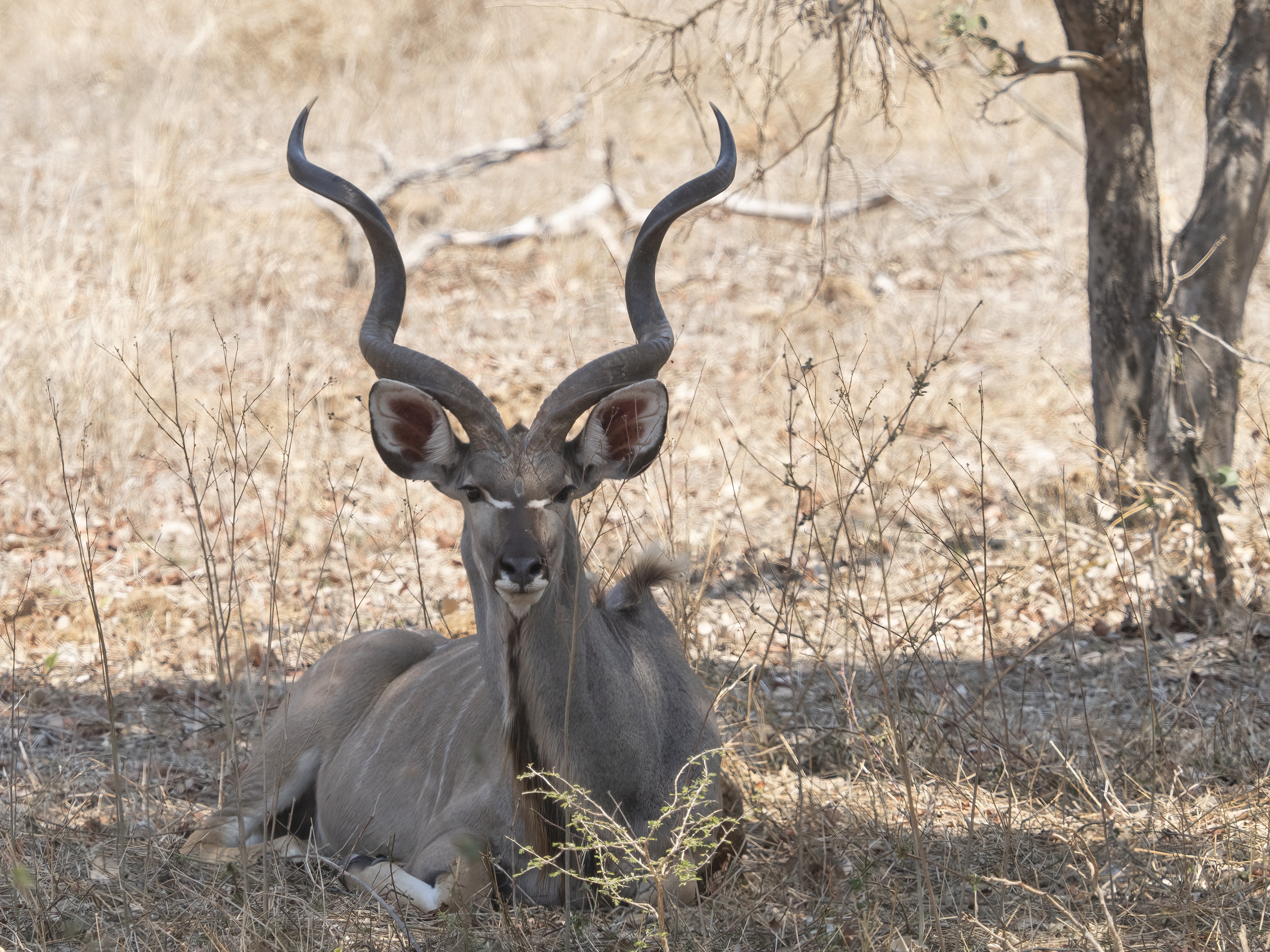
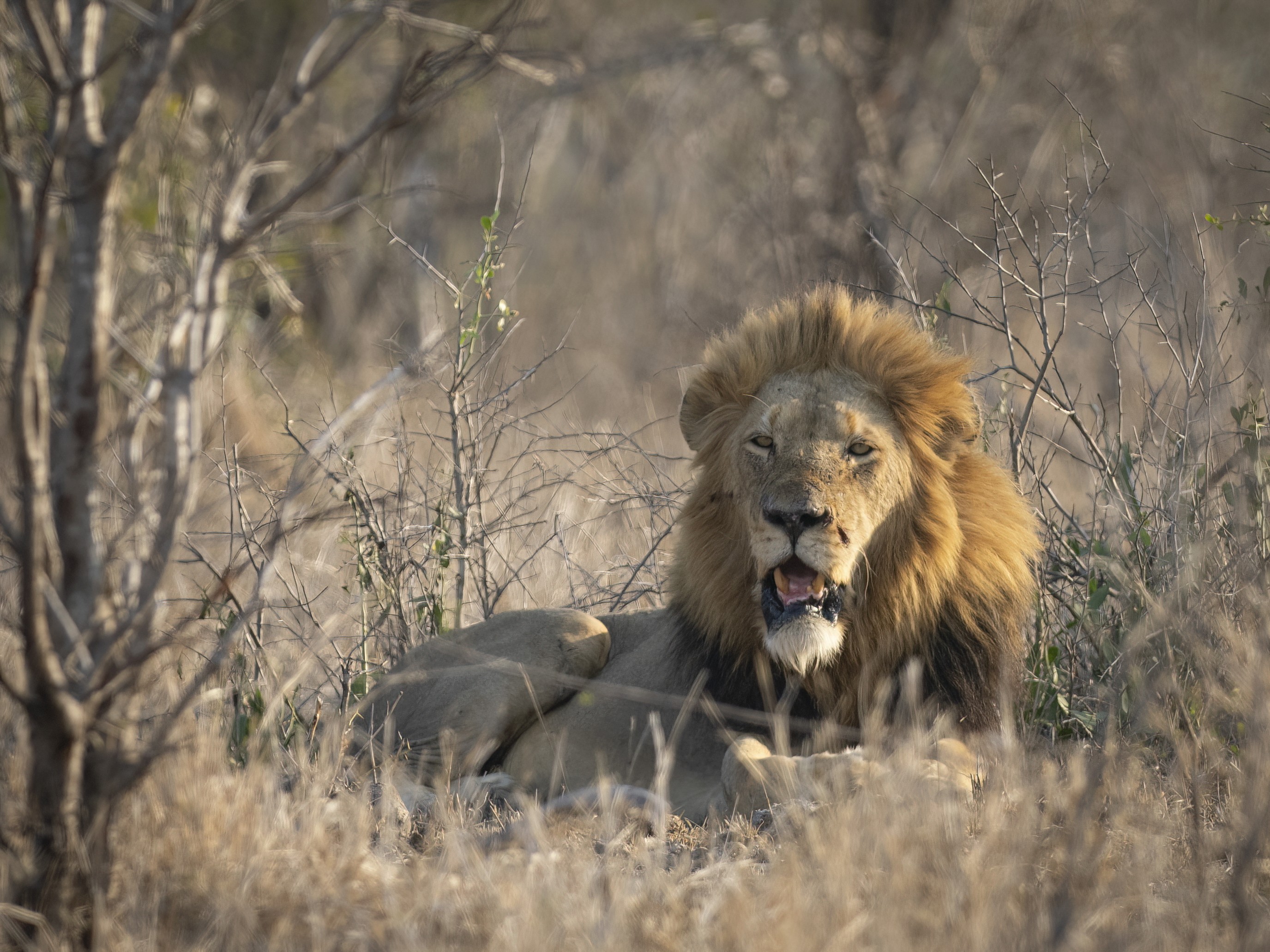
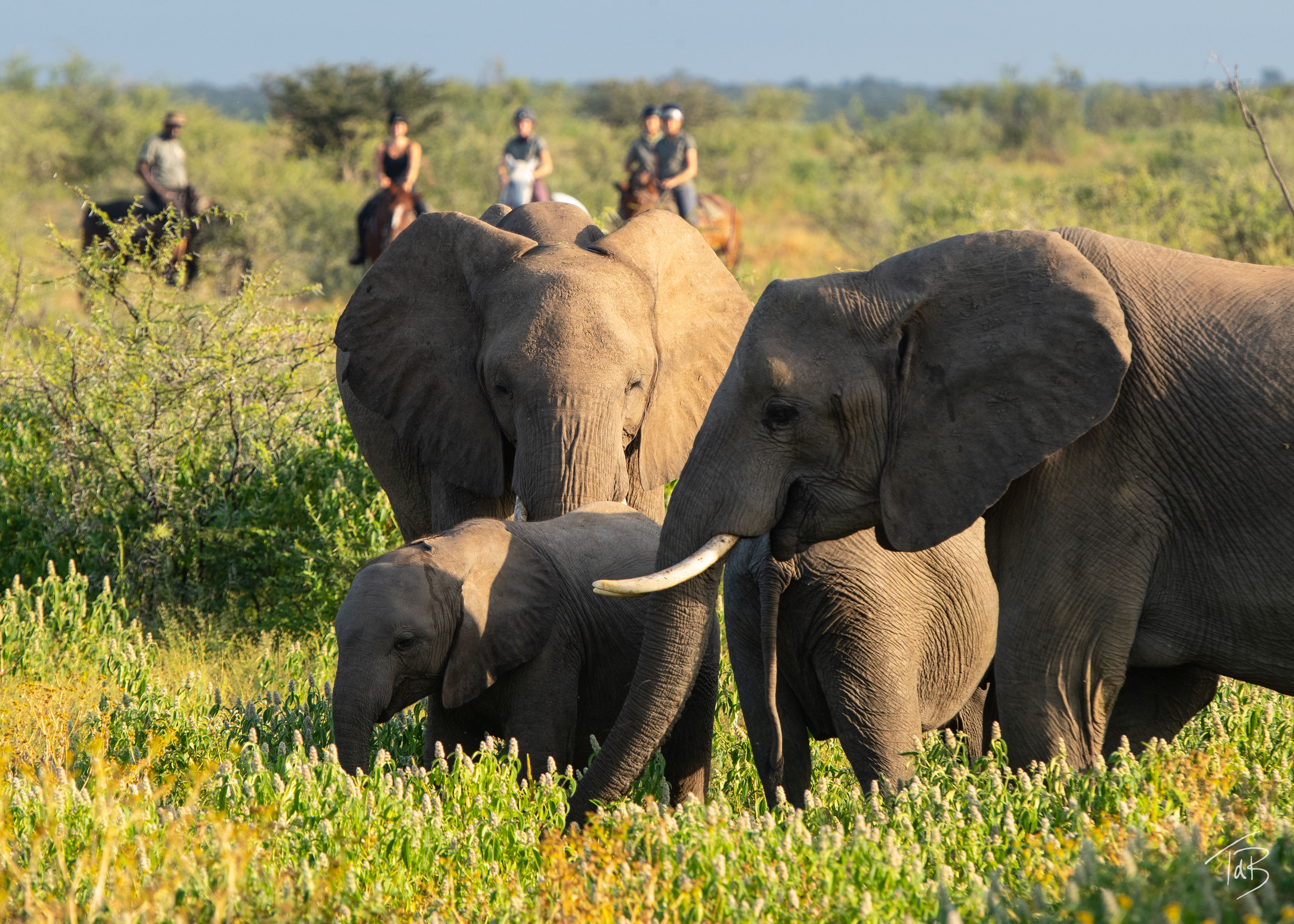
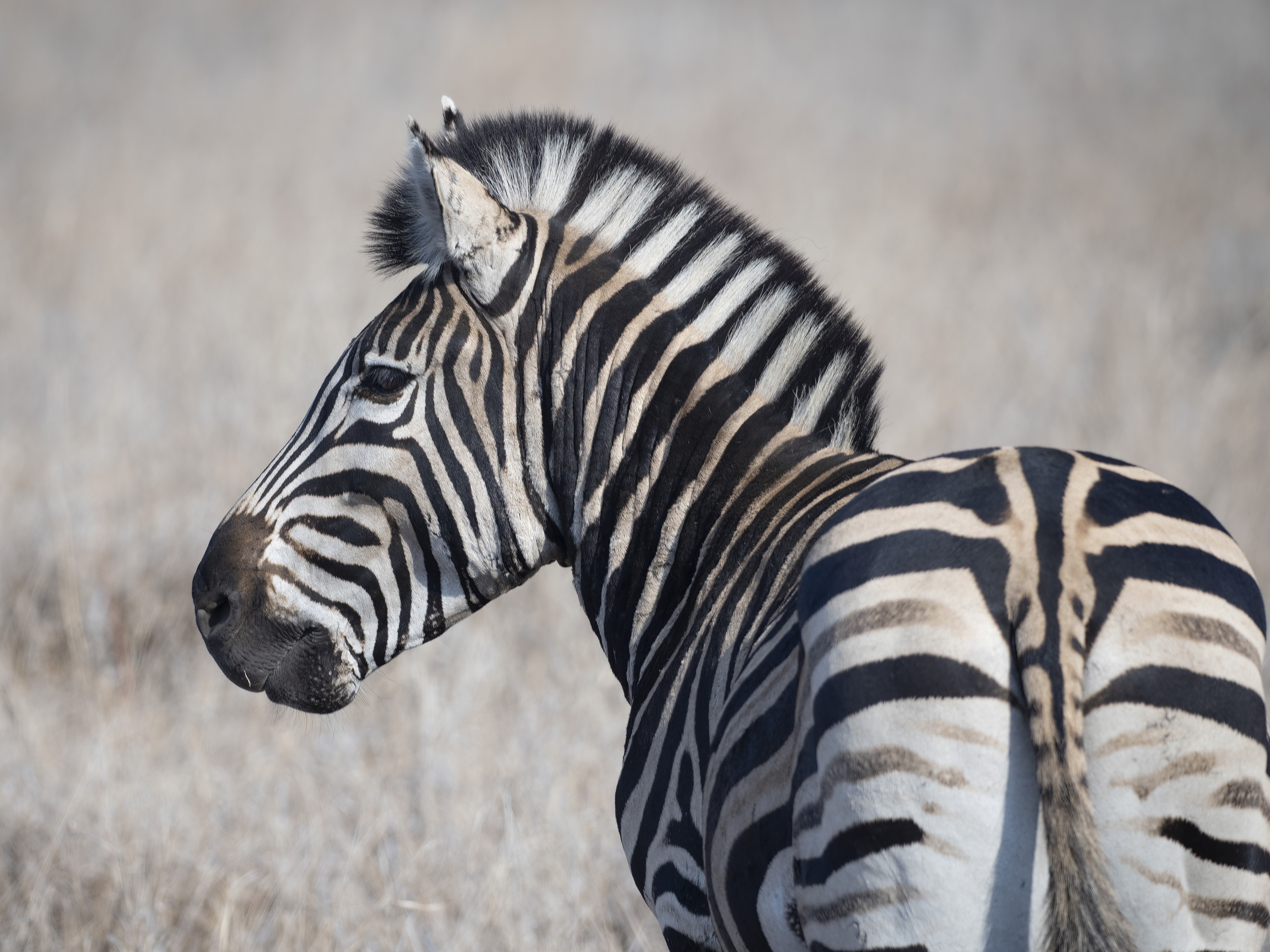
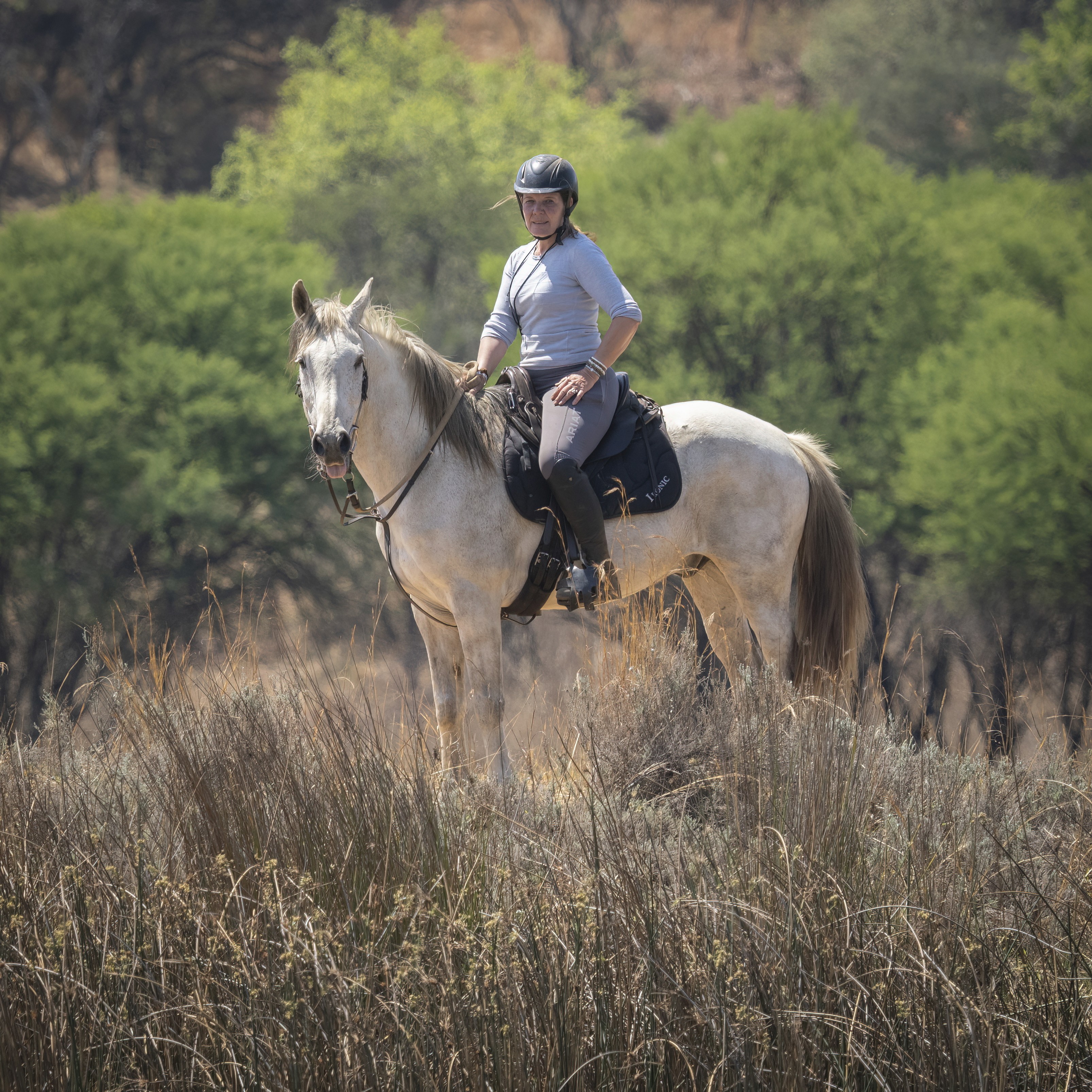
Wild Ride Horse Safaris takes place in Bezhoek Private Nature Reserve – a private nature reserve of around 4,500 hectares located in the Olifants River Valley in Mpumalanga, eastern South Africa. The reserve is just under two hours from Johannesburg and Pretoria, in a malaria-free area surrounded by dramatic and varied scenery. The landscape in Bezhoek is characterised by an unusually high level of ecological diversity, with open savannahs, wetlands, permanent watercourses, riverine forests, rocky ridges and impressive cliffs. The reserve includes both deep ravines and wide plains, creating a safari experience with great variety in terrain and nature. The area is also designated a protected natural area thanks to its high biodiversity and the presence of several rare plant and animal species. Although Bezhoek is not a Big Five reserve, the wildlife is rich and varied. Visitors may see leopard, hyena, giraffe, zebra, kudu, eland, sable antelope, blesbok, oribi, warthog, jackal, and both black and blue wildebeest, as well as several smaller and more unusual species such as honey badger and porcupine. The reserve is also home to more than 300 bird species, making it especially interesting for birdwatchers. Conservation and preservation are a central part of the reserve's identity. Bezhoek actively works to protect and restore the area by tackling invasive plant species and ensuring the long-term conservation of the local biodiversity. Highlights include rare cycad plants, a large number of grass species, as well as archaeological remains and rock art from earlier cultures in the area.
About Bezhoek Private Nature Reserve
Wild Ride Horse Safaris takes place in Bezhoek Private Nature Reserve – a private nature reserve of around 4,500 hectares located in the Olifants River Valley in Mpumalanga, eastern South Africa. The reserve is just under two hours from Johannesburg and Pretoria, in a malaria-free area surrounded by dramatic and varied scenery. The landscape in Bezhoek is characterised by an unusually high level of ecological diversity, with open savannahs, wetlands, permanent watercourses, riverine forests, rocky ridges and impressive cliffs. The reserve includes both deep ravines and wide plains, creating a safari experience with great variety in terrain and nature. The area is also designated a protected natural area thanks to its high biodiversity and the presence of several rare plant and animal species. Although Bezhoek is not a Big Five reserve, the wildlife is rich and varied. Visitors may see leopard, hyena, giraffe, zebra, kudu, eland, sable antelope, blesbok, oribi, warthog, jackal, and both black and blue wildebeest, as well as several smaller and more unusual species such as honey badger and porcupine. The reserve is also home to more than 300 bird species, making it especially interesting for birdwatchers. Conservation and preservation are a central part of the reserve's identity. Bezhoek actively works to protect and restore the area by tackling invasive plant species and ensuring the long-term conservation of the local biodiversity. Highlights include rare cycad plants, a large number of grass species, as well as archaeological remains and rock art from earlier cultures in the area.
Rates 2026
January to December
7 nights in shared accommodation
ZAR 18 900
January to December
7 nights in shared accommodation
ZAR 18 900
Including
7 nights per person in shared standard accommodation Breakfast, muffins or biscuits for afternoon tea, as well as a hearty cooked dinner in the evening All riding with access to over 100 km of riding trails Tea, coffee, water and squash Town trips when staff go into town for shopping Laundry of clothes Cleaning of accommodation
Excluding
Lunch or other snacks beyond what is stated Transfers, flights, visa costs, and travel insurance Personal expenses Extra activities and excursions Drinks not mentioned above (guests are welcome to bring their own alcoholic and non-alcoholic drinks) Tips
Including
7 nights per person in shared standard accommodation Breakfast, muffins or biscuits for afternoon tea, as well as a hearty cooked dinner in the evening All riding with access to over 100 km of riding trails Tea, coffee, water and squash Town trips when staff go into town for shopping Laundry of clothes Cleaning of accommodation
Excluding
Lunch or other snacks beyond what is stated Transfers, flights, visa costs, and travel insurance Personal expenses Extra activities and excursions Drinks not mentioned above (guests are welcome to bring their own alcoholic and non-alcoholic drinks) Tips
Complete price ladder
Price per night: ZAR 2700 per person sharing 2 weeks: ZAR 37 800 3 weeks: ZAR 56 700 4 weeks: ZAR 75 600 5 weeks: ZAR 94 500 6 weeks: ZAR 113 400 7 weeks: ZAR 132 300 8 weeks: ZAR 151 200
Transfer: ZAR 2000 per person
Return transfer from OR Tambo International Airport. Requires arrival and departure on a Monday and is always paid in cash (ZAR) upon arrival. If you wish to arrive or have your departure on a day other than Monday, please contact us.
More destinations
Sign up for the newsletter
Follow along behind the scenes and get a first look at unique offers.
Sign up for the newsletter
Follow along behind the scenes and get a first look at unique offers.
Sign up for the newsletter
Follow along behind the scenes and get a first look at unique offers.